



Motion Simulator Racing: Is a Motion Rig Worth It in 2026?
|
|
There is a version of sim racing where the wheel moves, the pedals push back, and the monitor displays a lap. And then there is a version where the entire cockpit tilts, pitches and rolls in response to the car's physics - where you feel every corner entry through your body, not just your hands. Motion simulators are the difference between those two experiences. Here's an honest look at whether a motion rig is worth it in 2026, what the options are, and where to start.
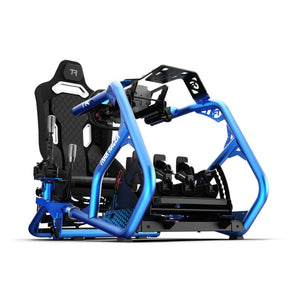
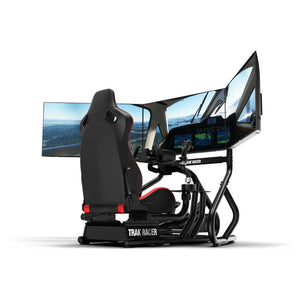
A motion simulator is a sim racing rig mounted to a platform that physically moves in response to in-game physics. When the car brakes hard, the platform pitches forward. When you accelerate, it pitches back. Corners produce lateral movement. Combined with direct drive force feedback and load cell pedals, the result is a level of physical immersion that a static rig simply cannot replicate.
Motion systems range from two degrees of freedom (2DOF - pitch and roll) up to six degrees of freedom (6DOF - pitch, roll, yaw, heave, surge and sway). More degrees of freedom means more dimensions of movement, more complex simulation of vehicle physics, and a higher price tag.

The honest case for a motion simulator comes down to two things: immersion and realism.
Immersion is the feeling of actually being in the car. On a static rig, no matter how good the force feedback, your body tells you that you're sitting still. A motion platform removes that contradiction. When the cockpit tilts into a corner, your body responds to real physical forces. The sense of presence inside the car increases dramatically, and with it, the engagement and enjoyment of every session.
Realism is the more technical case. Motion feedback adds a physical information channel that direct drive and load cells alone don't cover. Understeer, oversteer, kerb strikes, bumpy track surfaces - all of these have a physical component in a real car that static rigs communicate only through your hands and feet. A motion platform brings your vestibular system into the equation. You feel the car's behaviour through your entire body, which adds information that makes you a more physically calibrated driver.
For sim racers who want to take their immersion to the next level, a motion rig is the step that delivers it.
The main reason most sim racers don't have a motion rig is price. Quality motion simulation hardware starts at several thousand dollars and scales up from there. That said, the price of quality motion simulation has come down meaningfully. The entry point has shifted from "out of reach for most" to "attainable for serious sim racers who save for it" - with the MOZA HMA150 at $5,499 representing a genuine starting point.

The MOZA HMA150 Motion System is our recommended starting point for sim racers entering motion simulation for the first time, at $5,499. MOZA's engineering philosophy applied to motion hardware - reliable, well-supported, and designed to integrate with the broader MOZA sim racing ecosystem. If you want to experience motion sim without committing to a six-figure build, the HMA150 is where to start.

Sigma Integrale is one of the leading names in motion simulation hardware, and GGD stocks multiple systems from their range:

A companion product to any motion rig: the Qubic System QS-BT1 physically tightens the harness under braking and cornering forces, adding an additional physical feedback channel that enhances immersion on both static and motion rigs.
Motion simulators are for sim racers who have already built a serious static rig and want to take immersion to the next level. The typical motion sim buyer at GGD is not new to sim racing - they've usually already invested in a quality direct drive wheelbase, load cell pedals and a proper cockpit, and they're looking for the next meaningful step in physical realism.
If you're still on your first direct drive setup, a motion rig is probably not your next purchase. Get the wheel, pedals and cockpit sorted first. Once those are optimised, motion simulation is a logical and impactful next step.
A motion simulator is a sim racing rig mounted to a platform that physically moves in response to in-game physics - pitching, rolling and tilting to simulate the forces the car experiences on track.
For sim racers who have already optimised their static setup and want to take immersion to the next level, yes. The combination of immersion and realism is significant. The MOZA HMA150 at $5,499 is the most accessible genuine entry point.
2DOF (pitch and roll) covers the most impactful motion cues for sim racing. 3DOF and 6DOF add additional axes for a more complete simulation. More DOF means more immersion and a higher price.
GGD stocks the MOZA HMA150 Motion System, and the Sigma Integrale DK2, DK2+ and DK6+ systems, along with the Qubic System QS-BT1 seat belt tensioner. Browse the full motion simulator range.
The MOZA HMA150 Motion System at $5,499 is our recommended entry point - a well-engineered system that delivers genuine motion simulation at the most accessible price in our range.
Contact the Gamer Gear Direct team at our Dandenong South showroom for a consultation. Visit us or get in touch to discuss your setup.
Ready to take your sim racing to the next level? Browse the full motion simulator range at Gamer Gear Direct - or visit our Dandenong South showroom for a full setup consultation.
Written by Karl Matias, Customer Service Specialist at Gamer Gear Direct. With six years of experience across racing and flight simulation, Karl has a well-rounded passion for all things sim and a knack for helping GGD customers find their perfect setup. Whether you're just starting out or looking to upgrade, Karl's been there - and probably already has an opinion on your next piece of gear.


