MOZA R3 vs R5: Showdown Of Sim Racing Wheels
|
|
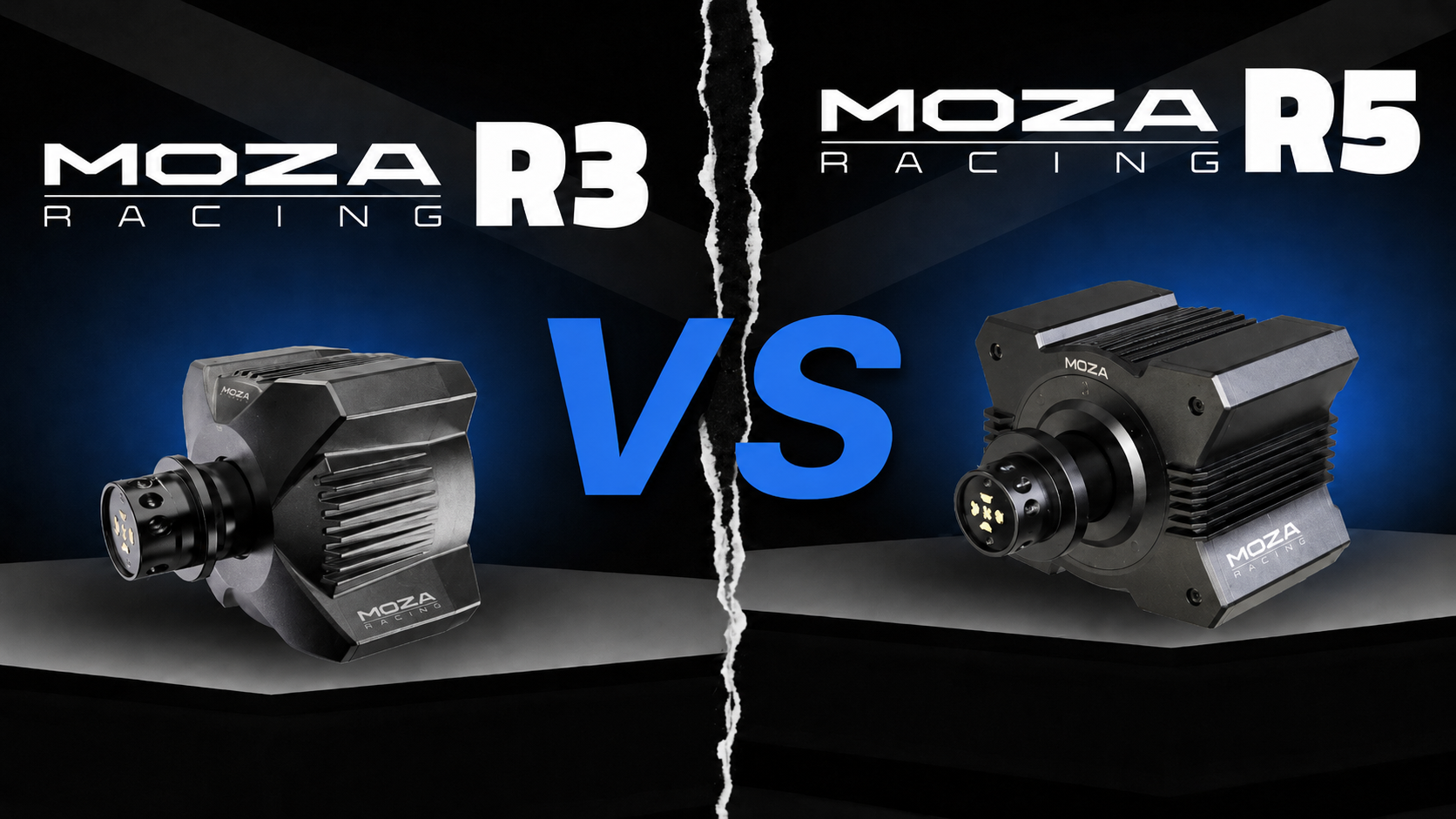
The MOZA R3 vs R5 comparison is one of the most common questions we get from customers moving from a gear-driven wheel into their first direct drive setup.
On paper, the decision looks simple. The MOZA R3 gives you 3.9Nm of direct drive torque and official Xbox compatibility. The MOZA R5 gives you 5.5Nm of direct drive torque and a stronger PC-focused platform. In real use, the right choice depends on your platform, desk or cockpit setup, driving style, upgrade plans and budget.
We’ve tested both at our Dandenong South showroom across compact desk-style setups and dedicated sim racing cockpits. We’ve also helped plenty of customers compare the MOZA R3 vs R5 when they’re standing in front of both options, asking the same question: “Do I need the extra torque, or is the R3 enough?”
For this MOZA R3 vs R5 comparison, we focused on real buying questions rather than lab-style numbers that don’t always help customers choose.
Our team tested both wheelbases through the type of setups customers commonly ask about in-store:
Desk-mounted use with the included table clamp
Cockpit-mounted use on a more stable racing simulator frame
Entry-level racing titles and more detailed sim titles
Default MOZA Pit House profiles, then adjusted force feedback settings
Short test drives and longer sessions to check comfort, heat and consistency
Pedal feel using the included SR-P Lite pedal set
We looked at the areas that actually change the ownership experience: force feedback strength, steering detail, mounting stability, software setup, pedal feel, upgrade flexibility and platform support.
That’s important because MOZA R3 vs R5 isn’t just a spec-sheet decision. A wheelbase can look great online, then feel very different once it’s clamped to your desk, bolted to a cockpit, or used for a long session in Assetto Corsa Competizione, F1, Forza or iRacing.
Trying to decide between the MOZA R3 or R5? Let’s break down the essential specs and design choices that set these two direct drive wheels apart.
Upgrading your sim setup or getting started for the first time, choosing the right fit makes all the difference.
The first thing we noticed in the MOZA R3 vs R5 test was not smoothness. Both feel smooth because both are direct drive.
The real difference in MOZA R3 vs R5 is force feedback headroom.
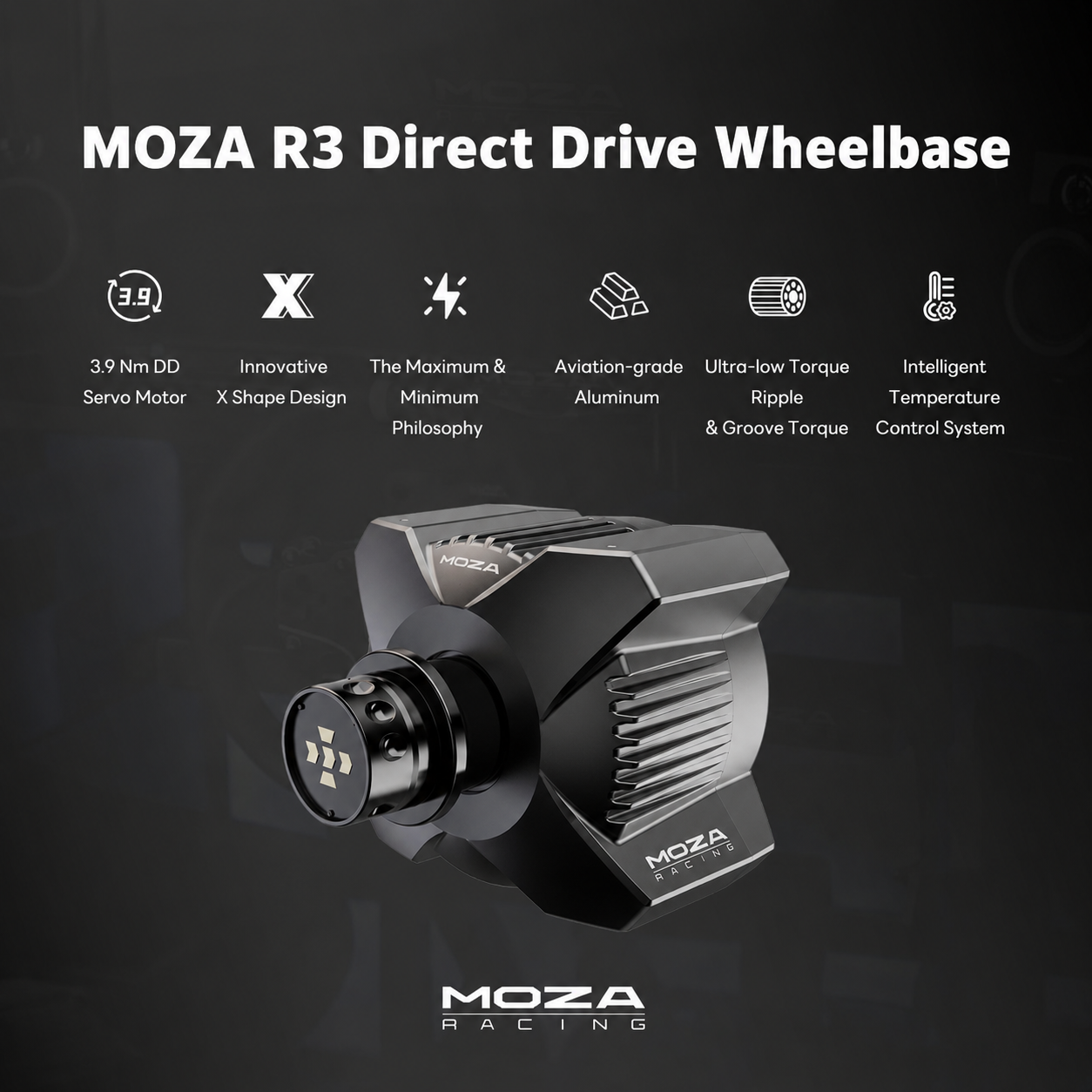
The MOZA R3 feels light, quick and easy to control. It gives you enough information through the wheel to feel kerbs, bumps, tyre scrub and steering load without feeling intimidating. For newer drivers, that makes it approachable. You can jump in, set your steering angle, adjust the force feedback and start driving without fighting the wheel.
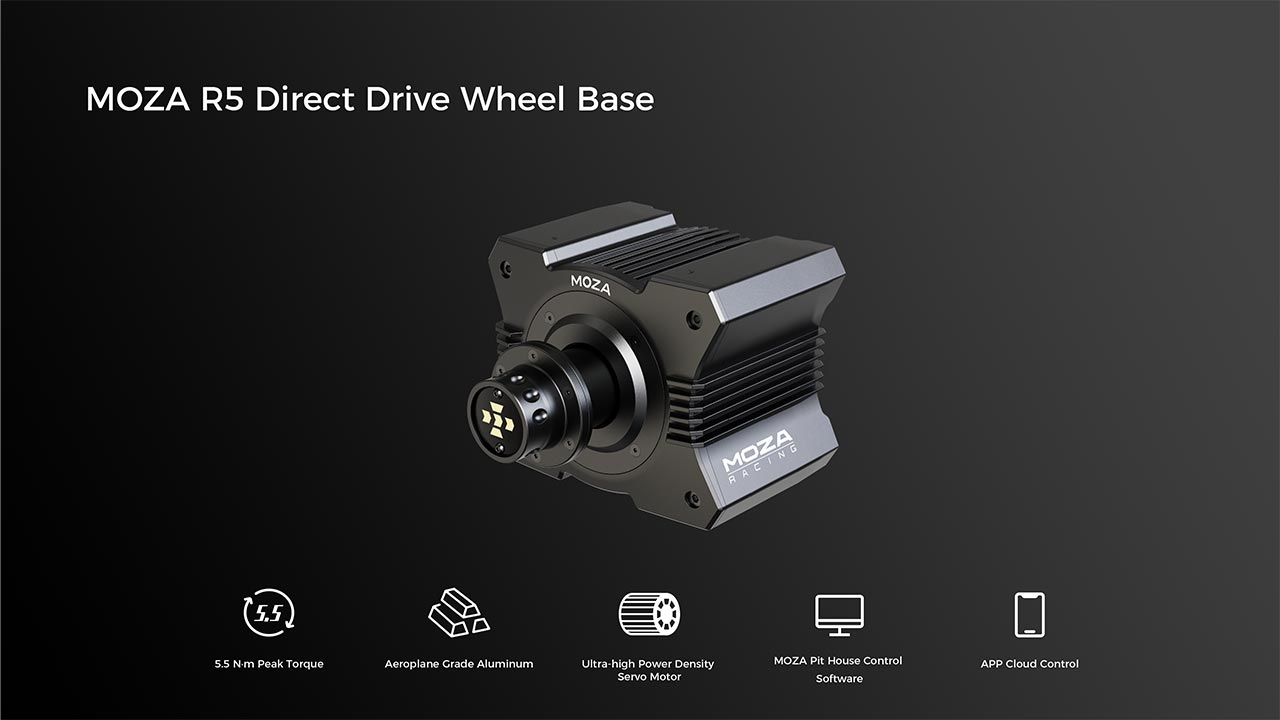
The MOZA R5 feels heavier and more confident. The extra 1.6Nm doesn’t sound massive on paper, but you can feel it through longer corners and higher-speed direction changes. The R5 gives you more resistance before the wheelbase feels saturated, so it suits drivers who want to push the feedback harder.
Both the MOZA R3 vs R5 feature advanced direct drive technology, delivering smooth and precise force feedback. The R3 produces a solid 3.9Nm of torque, while the R5 steps up to 5.5Nm, giving you a punchier driving feel.
Here’s a quick side-by-side of their main specs:
Feature |
MOZA R3 |
MOZA R5 |
|---|---|---|
Torque Output |
3.9Nm |
5.5Nm |
Weight |
Lighter |
Slightly Heavier |
Build Material |
Aluminium/Composite |
Aluminium/Composite |
Cooling |
Active Fan |
Enhanced Active Fan |
RGB Lighting |
Yes |
Yes |
Both wheels use a blend of aluminium and composite parts for strength and comfort. Their cooling systems are designed to handle long sessions, keeping temps in check. RGB lighting and tactile feedback add a modern touch, making the them stand out visually.
When you look at the MOZA R3 and R5 side by side, you’ll spot some distinct differences in their size and finish. The R3 is more compact, perfect for smaller desks, while the R5 offers a chunkier, more robust design suited for full cockpits.
Both models include flexible mounting options, so you can bolt them to a desk or a dedicated sim rig. Button layouts are ergonomic, with the R5 usually offering a few extra controls. Wheel rim styles range from classic round to D-shape, letting you pick your vibe.
Cable management is straightforward, with easily accessible ports on both wheels.
Durability is a big deal for sim racers, and both the MOZA R3 and R5 deliver on this front. Aluminium housings resist wear and tear, while composite accents keep things lightweight. Over time, users report minimal issues with loose parts or fading finishes.
Warranty coverage is solid, giving you peace of mind for those marathon sessions. Maintenance is simple, usually just a quick wipe down and occasional firmware check. Many long term owners praise the reliability, saying their MOZA R3 and R5 wheelbases have stood the test of time.
If you want to explore the full MOZA lineup and see how these wheels fit into the bigger picture, check out the MOZA Racing product collection.
Choosing between the MOZA R3 or R5 often comes down to how each wheel performs in the heat of a race.
Let’s dig into what really sets these two apart when it comes to the feel, immersion, and reliability you’ll experience on your virtual track.
When you compare the MOZA R3 vs R5 on force feedback, the first thing you’ll notice is the difference in torque output. The R3 delivers up to 3.9Nm, offering precise, detailed feedback that’s perfect for lighter cars and technical tracks. The R5 ups the ante to 5.5Nm, giving you more punch, especially if you love driving GT or formula cars where heavier resistance brings more realism.
Both wheels use direct drive technology, which means the force feedback is crisp and lag-free. The R5’s extra power shines in games like iRacing or Assetto Corsa Competizione, letting you feel every kerb and bump. If you want to dive deeper into how direct drive systems work and why they matter for sim racing, check out direct drive racing wheels explained.
Sensitivity tuning is straightforward on both models, with custom profiles available for different cars and games.
The result? Consistent, nuanced force feedback that keeps you in control, whether you’re tackling hairpins or catching slides.
If you’re chasing every tenth of a second, the R5’s stronger torque curve gives a more physical sensation, helping you trust your inputs during high-speed corners. The R3, on the other hand, is agile and responsive, making it a favourite for those who value subtlety over brute strength.
Feedback consistency is crucial for long races. The R3 offers a smooth, linear response that’s easy to adapt to, especially for newcomers. The R5, with its extra muscle, can make you feel more connected to the car, boosting confidence and helping shave seconds off your lap times in endurance stints.
Many users mention that, in the MOZA R3 vs R5 debate, beginners gravitate toward the R3 for its approachable feel, while advanced sim racers love the R5’s realism and immersion. The choice really depends on your driving style and the types of cars you enjoy.
Let’s talk about what happens during those marathon sim sessions. The MOZA R3 and R5 are both engineered for quiet operation, but the R3 is almost whisper-silent, making it ideal for shared spaces or late-night racing. The R5’s cooling fans kick in under heavy load, but most users find the noise level unobtrusive.
Heat management is solid on both wheels, thanks to robust cooling systems. Even after hours of intense racing, performance remains stable with no noticeable fade or overheating. Firmware updates have further improved reliability, minimising crashes or connection drops.
Real-world stress tests show both wheels holding up well over time. Whether you’re a weekend warrior or a daily driver, you can count on consistent feedback every time you jump into your rig.
Choosing between MOZA R3 vs R5 showdown is not just about specs or force feedback. Compatibility and integration with your setup are crucial. Whether you are gaming on PC or console, or planning a complete sim racing rig, understanding how each wheel fits into the bigger picture makes all the difference.
Platform support is a top concern. Both wheels shine on PC, offering robust compatibility with most sim racing titles. Plug-and-play functionality is standard, so you can get racing quickly without tech headaches.
Console support is more nuanced. As of recent updates, the R3 offers official Xbox compatibility, while the R5 remains PC-focused. PlayStation support is still pending for both, so if you game across platforms, double-check before purchasing.
Supported games include favourites like iRacing, Assetto Corsa, and F1. Regular software updates keep both wheels fresh and compatible with the latest titles. Swapping between PC and Xbox is straightforward on the R3, with minimal setup changes.
PC: Full support for both R3 and R5
Xbox: R3 only (official)
PlayStation: Not supported
Plug-and-play: Yes, for most titles
Game compatibility: Wide, with regular updates
The heart of any sim racing setup is how well your gear works together. Moza’s ecosystem is designed for seamless integration, making the MOZA R3 vs R5 debate about more than just the wheelbase.
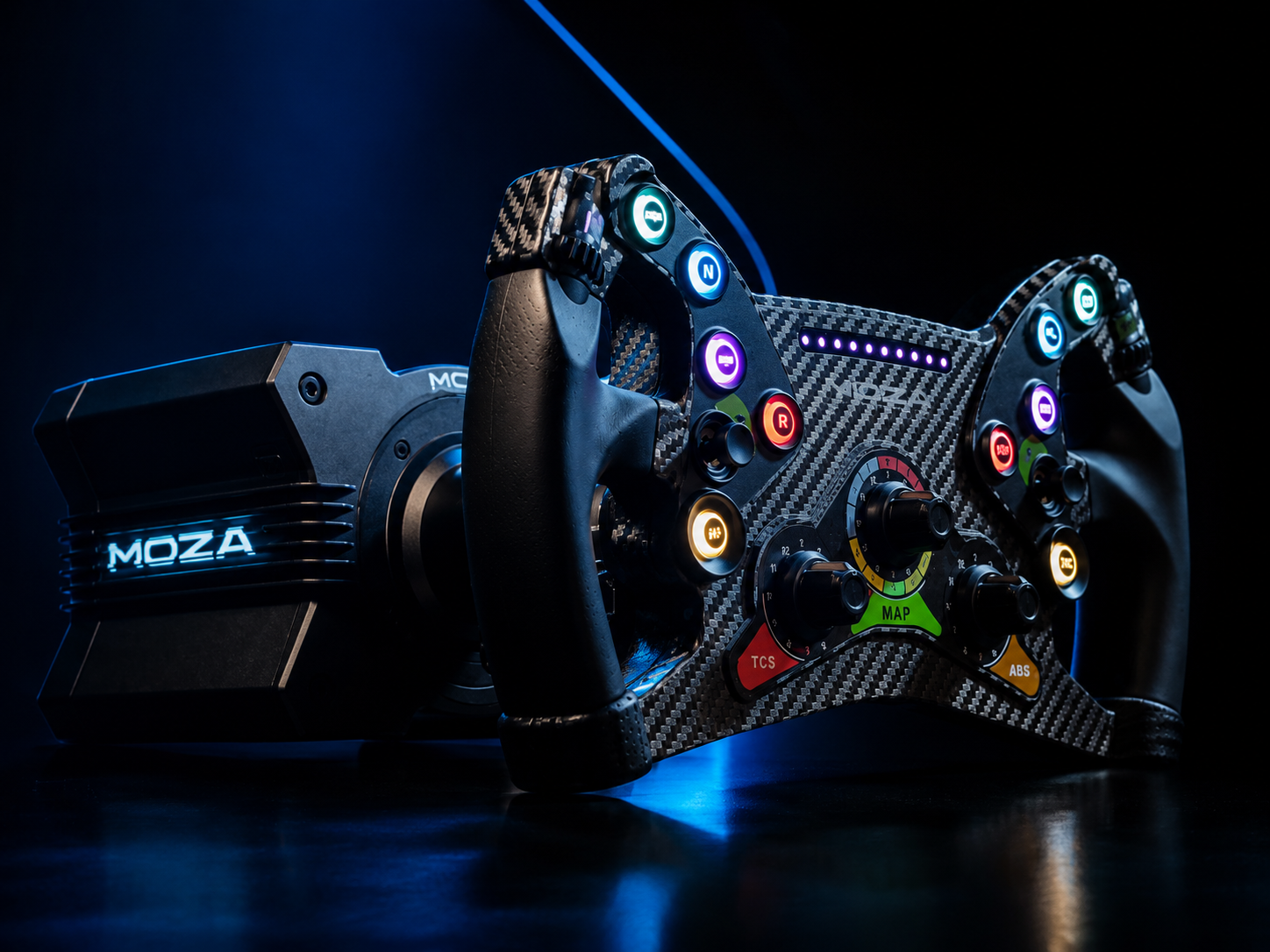
Both models natively support MOZA pedal sets, shifters, and handbrakes. Wheel rim interchangeability is a real plus, letting you swap rims based on your racing style. Expansion options include button boxes, displays, and even custom mounts for a cockpit or desk setup.
Accessory mounting is straightforward, with clearly labelled ports and tidy cable management. Building a complete MOZA rig is as simple as adding new components as your needs grow.
In the sim racing world, flexibility and community support make a huge difference. The MOZA R3 vs R5 comparison benefits from open standards, allowing you to mix and match with some non-Moza peripherals.
While official support is best for MOZA accessories, the community has developed mods and firmware tweaks to boost compatibility with third-party gear. Firmware updates are frequent, often adding features suggested by users in forums.
Community insights are invaluable for troubleshooting and customisation tips.
From adding a non-MOZA pedal set to experimenting with custom firmware, active forums and Discord groups can help you get it done.
Modding: Open, with growing support
Non-MOZA gear: Some compatibility, especially via community solutions
Firmware: Regular updates, community-driven features
Community: Active, supportive, and resource-rich
No matter your setup, the MOZA R3 vs R5 debate benefits from both a vibrant community and a flexible ecosystem, making them future-ready choices for every sim racer.
Thinking ahead? Both the R3 and R5 offer clear upgrade paths within the MOZA ecosystem. You can add new rims, better pedals, shifters, or even handbrakes as your skills grow. Resale value stays relatively strong, especially for the R5, thanks to its higher demand in the second-hand market.
Warranty coverage for both is typically 2 years, giving peace of mind for your investment. Expect solid after-sales support and frequent software updates, which help future-proof your setup. If you’re keen to see how these wheels fit into a broader sim racing journey, the Ultimate Sim Racing Guide is a must-read for anyone considering the MOZA R3 vs R5 as a long-term choice.
Unboxing a MOZA wheel feels premium, with both the R3 and R5 packed securely and presented well. Most users say the installation is straightforward, especially if you’re using a standard desk or sim rig.
The included instructions are clear, and the necessary tools come in the box.
Software setup is quick, with automatic firmware prompts.
Plug-and-play functionality is strong on PC, but double-check compatibility if you’re on console.
Troubleshooting is rare, but if you hit a snag, the MOZA community forums are full of step-by-step walkthroughs and video guides. Once connected, you’ll notice the tactile difference between the R3 and R5 from the very first lap.
When it comes to the MOZA R3 vs R5 user experience, feedback is overwhelmingly positive. Beginners love the R3 for its lighter feel and reliability, while seasoned racers are drawn to the R5’s extra muscle and customisation.
Users praise the R5 for its value and punchy force feedback, but also note its larger footprint compared to the R3. Community polls often show satisfaction scores above 90% for both wheels.
You’ll find stories of improved lap times, easier setup, and long-term durability. Some users mention button placement as a personal preference, but most agree both models deliver a solid, immersive drive.
MOZA’s reputation for support is a major plus in the MOZA R3 vs R5 conversation. Firmware and software updates are released regularly, often adding new features or smoothing out bugs.
Customer service is responsive, with warranty claims handled quickly.
Community guides and troubleshooting threads are abundant and easy to follow.
Owners report that both wheels hold up well under daily use, with minimal issues over time.
Brand loyalty is strong, thanks to consistent product quality and an active online community. Many racers say their MOZA wheels remain reliable, even after years of regular driving.