


Golf Simulator Cost Guide: What to Expect in 2025
|
|
Dreaming of playing golf at home no matter the weather? Wondering what your golf simulator cost will look like in 2025? You are not alone. More Aussies are turning to golf simulators, whether for personal enjoyment or to boost business at commercial venues.
Before you tee off on your purchase, understanding every golf simulator cost is crucial. This guide will help you budget smartly, avoid surprises, and get the best value for your investment. We will break down price ranges by setup type, explain the key components, reveal hidden and ongoing expenses, share cost-saving tips, and highlight trends shaping the market in 2025.
Curious about what you’ll really spend on a golf simulator next year? Let’s break down the numbers so you can budget smartly and avoid any nasty surprises along the way.
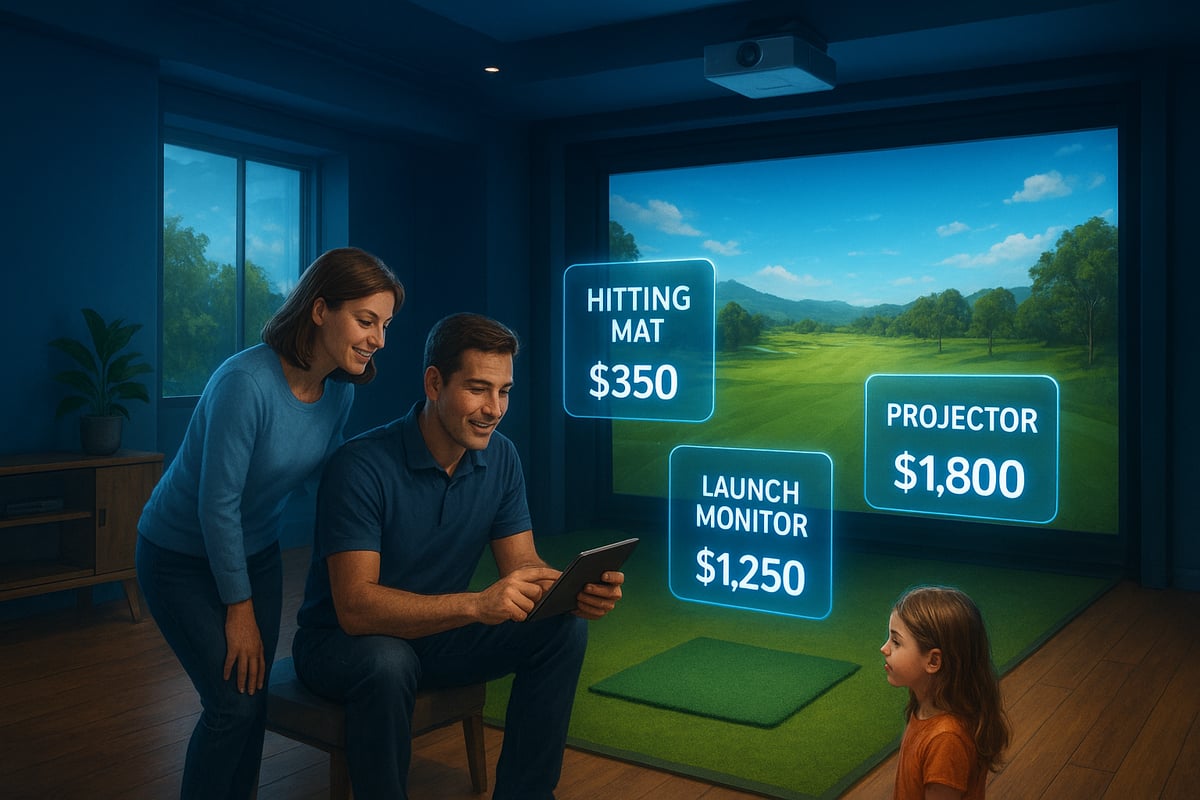
Golf simulator cost varies widely depending on the type of system you choose. Here’s a snapshot of what you can expect in 2025:
| Simulator Type | Typical Price Range (AUD) | Features |
|---|---|---|
| Entry-Level | $3,000 - $7,000 | Basic tracking, limited courses |
| Mid-Range | $7,000 - $15,000 | Enhanced accuracy, better visuals |
| Premium/Professional | $15,000 - $40,000+ | Advanced tech, full realism |
| Commercial Setups | $25,000 - $70,000+ | Multi-bay, commercial durability |
Home setups are generally more affordable than commercial ones, but adding pro features will push the golf simulator cost higher. Australian prices are expected to rise slightly in 2025, following global tech trends and local demand.
Several important factors drive the final golf simulator cost for your setup:
Understanding these factors helps you compare options and spot where your money will make the most impact.
Let’s look at what’s included at different golf simulator cost tiers in Australia:
Australian prices can be slightly higher than overseas averages due to shipping and local support. For a deeper dive into what goes into each price bracket, check out this How Much Does a Golf Simulator Cost guide.
By understanding these examples, you can plan your budget confidently and choose the right setup for your needs.
Thinking about setting up your dream golf simulator? Understanding each component and how it affects your golf simulator cost is essential for smart budgeting. Let’s break down what you’ll need, what you might want, and how these choices shape your overall investment. For a deeper dive into current trends and essentials, check out the Golf Simulator Guide 2025.

Launch monitors are the brains of your golf simulator. You’ll find three main types: camera-based, radar-based, and photometric systems. Camera-based setups start around $700, offering basic ball tracking, while radar-based monitors, known for accuracy and versatility, often range from $2,000 to $8,000. Photometric models balance price and precision, landing between $1,500 and $5,000.
Popular brands like SkyTrak, Foresight, and TrackMan offer models at different price tiers. High-end systems deliver pro-level accuracy, but if you’re just starting, an entry-level option can still give you a realistic golf simulator cost without breaking the bank.
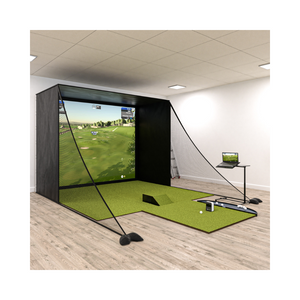
The impact screen is where your virtual fairways come to life. Quality screens typically cost $500 to $2,500, depending on size and durability. Enclosures, which keep balls contained and enhance immersion, add $1,000 to $3,000 to your golf simulator cost.
If you’re aiming for a budget-friendly solution, heavy-duty practice nets can replace screens, often costing just $200 to $600. However, screens last longer and deliver a more authentic experience, usually needing replacement every 3 to 5 years.
Your hitting mat affects both feel and longevity. Basic mats start at $150, while premium, shock-absorbing models with real turf feel can reach $1,000. Investing in a quality mat helps lower your golf simulator cost over time by reducing replacement frequency and protecting your joints. Most mats last two to five years with regular use.
Projectors bring your virtual courses to life. Short-throw projectors are ideal for tight spaces and cost $800 to $2,500, while standard models can be a bit cheaper but need more room. Look for high-brightness, HD options for crisp visuals. Mounting and screen compatibility can add to your overall golf simulator cost, so factor those in when planning your setup.
Software is the heart of the experience. Some brands offer one-time purchase options from $500 to $2,000, while others use annual subscriptions ranging from $200 to $800. Advanced features, multiplayer modes, and access to world-class courses can increase your golf simulator cost, so weigh your needs and preferred courses before subscribing. Updates and add-ons may also come with extra fees.
Want to make your space next-level? Audio systems, ambient lighting, comfortable seating, and automatic ball dispensers can all be added. Home automation integration or advanced data analytics tools are now popular upgrades, ranging from $300 for basics to several thousand for high-tech options. While these extras aren’t essential, they can transform your golf simulator cost into a true investment in fun and performance.
Dreaming of your own golf simulator? Before you dive in, it’s crucial to look beyond the sticker price. Let’s break down the hidden and ongoing costs that can catch buyers by surprise in Australia.

First up, your space. You’ll need a room with enough width, height, and depth for both your swing and the equipment. Most home golf simulators require at least 3m x 4m of floor space and about 2.7m of ceiling height. If your chosen room doesn’t meet these requirements, you might be facing renovation expenses.
Costs can include:
In Australia, basic renovation can start at $1,500 and easily exceed $6,000 for extensive changes. Climate control and electrical upgrades may push the price higher. To get a clearer sense of your total golf simulator cost, try this Golf Simulator Cost Calculator to factor in everything from paint to powerpoints.
Next, consider how your gear gets from the store to your door, and then into working order. Delivery fees for large items like screens, mats, and enclosures can range from $200 to $500 depending on location and weight.
Professional installation, which includes assembly and calibration, can add another $500 to $2,000 to your golf simulator cost. While DIY can save money, it requires time, patience, and the right tools. Don’t forget to budget for help with heavy lifting, especially if stairs or tight spaces are involved.
Even after setup, ongoing costs are part of the golf simulator cost equation. Key components like impact screens, hitting mats, and sensors have a lifespan—screens might last 2–4 years, mats about 1–3 years depending on use.
Typical expenses include:
Many brands offer warranties, but accidental damage or wear and tear is often out-of-pocket. Regular maintenance checks can help catch small issues before they become expensive problems.
Most simulators now come with powerful software, but many features are locked behind subscriptions. Annual access to premium course libraries or advanced analytics can cost $300–$800 per year, depending on the brand and package.
Look for ongoing update costs, as new courses or features might be sold as add-ons. Make sure to factor these digital costs into your long-term golf simulator cost planning, especially if you want the latest courses or multiplayer options.
Finally, protect your investment. Home insurance may not automatically cover your simulator setup, especially if you’ve renovated or added expensive electronics. For commercial setups, liability insurance is a must in case of injury or damage.
Check with your insurer about coverage for your golf simulator cost, and update your policy as needed. It’s better to be safe than sorry if the unexpected happens.
Looking to keep your golf simulator cost in check without missing out on quality? With some clever planning and a few insider tips, you can create a dream golf simulator setup without blowing your budget. Let’s break down smart ways to save, from bundles to expert advice.
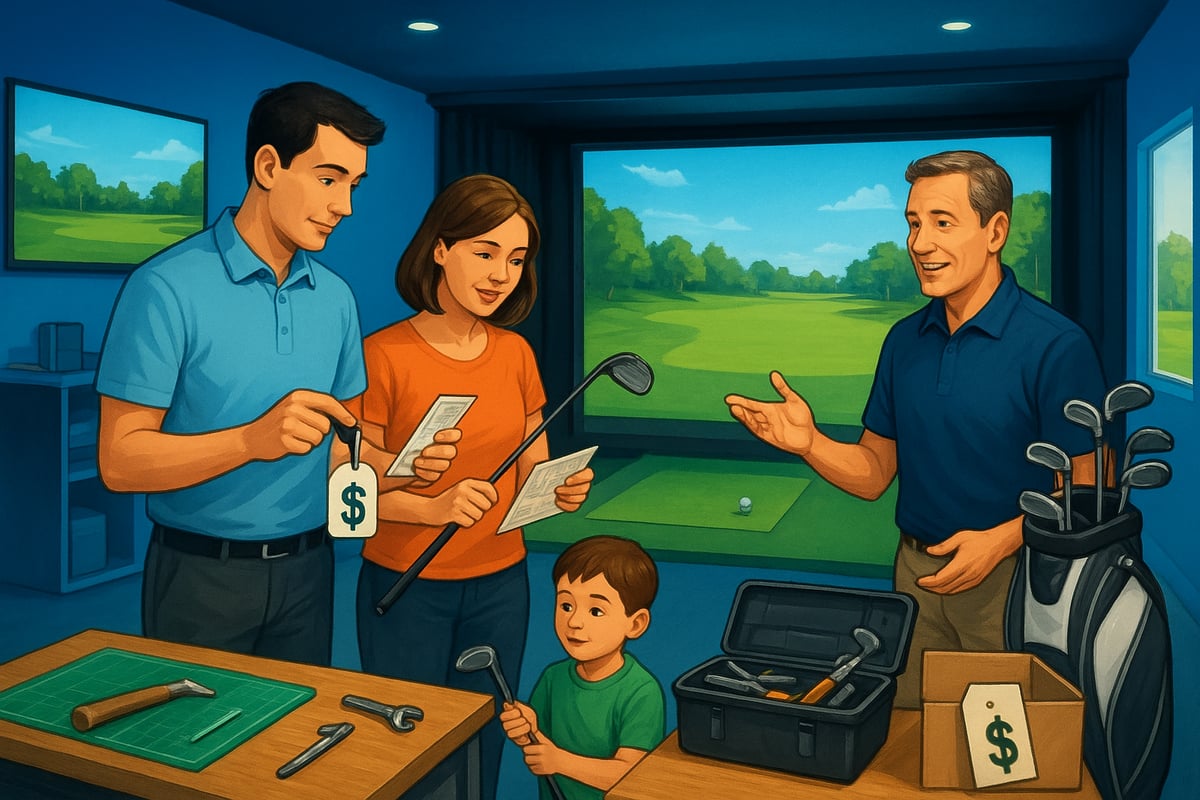
Bundled packages are a fantastic way to reduce your overall golf simulator cost. These deals usually include essential components like the launch monitor, mat, screen, and software—all in one package. Not only do you save compared to buying each item separately, but you also ensure compatibility between parts.
For a quick comparison of top-value options, check out the 5 Best Home Golf Simulator Picks in 2025, which outlines popular bundles and what you get for your money.
Going pre-owned can be a game changer for your golf simulator cost. Many reputable suppliers offer refurbished systems that have been tested and certified, so you get quality without the brand-new price tag.
When shopping used, always:
If you’re patient and do your homework, you can snag excellent gear at a fraction of the cost.
If you’re handy, DIY installation is one of the best ways to lower your golf simulator cost. You’ll save on labour fees and have more control over every detail. However, it does require time, tools, and a bit of technical know-how.
For a step-by-step breakdown, the Complete Golf Simulator DIY Guide covers everything you need to know about building your own setup on a budget.
Don’t get swept up in the hype—focus on must-have features to keep your golf simulator cost manageable. Start with a reliable launch monitor and quality hitting mat, then gradually upgrade as your budget allows.
This approach lets you enjoy your simulator now while leaving the door open for future improvements.
Timing your purchase can make a huge difference in your golf simulator cost. Major sales events like Black Friday or End of Financial Year are prime times for deals on both packages and individual components.
A little patience can result in significant savings on your dream setup.
Buying from Australian suppliers not only supports local business, but it can also help you save on shipping and get quicker support. Many local retailers offer in-person demos and expert consultations to help you get the most out of your investment.
With the right advice, you can avoid costly mistakes and ensure your golf simulator cost stays within budget.
Curious about what’s driving changes in golf simulator cost for 2025? Let’s explore the latest trends, from cutting-edge tech to eco-friendly upgrades, so you can plan your investment with confidence.
The golf simulator cost landscape is shifting fast as technology leaps forward in 2025. You’ll find AI-powered swing analysis, smarter feedback, and sensors that track your every move with pinpoint precision. Expect wireless and portable options to become more mainstream, making it even easier to set up your dream system.
These upgrades don’t just boost your experience—they influence pricing too. Some innovations, like improved sensor accuracy, are becoming more affordable, while premium features might push prices up in the short term. To see how these changes impact the Aussie market, check out the Ultimate Guide to Golf Simulators in Australia, which covers the latest tech and pricing trends.
Have you noticed more brands popping up in Australia’s simulator scene? You’re not imagining things. The market is expanding quickly, with new players offering a wider range of options, features, and price points. This increased competition is a win for buyers, often making golf simulator cost more competitive and accessible.
According to the Australia Golf Simulator Market Outlook, the industry is projected to grow steadily through 2025 and beyond. More choice means you can find a simulator that fits your needs and budget, whether you’re after basic practice or pro-level immersion.
Sustainability is teeing off in the golf simulator world. In 2025, you’ll see more energy-efficient hardware and systems made with recycled or renewable materials. Eco-friendly hitting mats and enclosures not only reduce environmental impact, but can help lower your long-term golf simulator cost by saving on energy and replacement expenses.
Worried about your simulator becoming outdated? Many 2025 systems are modular and upgradeable, so you can swap out components as tech evolves. Look for setups with ongoing software support and compatibility guarantees. Planning ahead helps ensure your golf simulator cost pays off for years to come.


