

F1 Sim Cockpit Guide: Create a More Authentic Formula Racing Setup
|
|
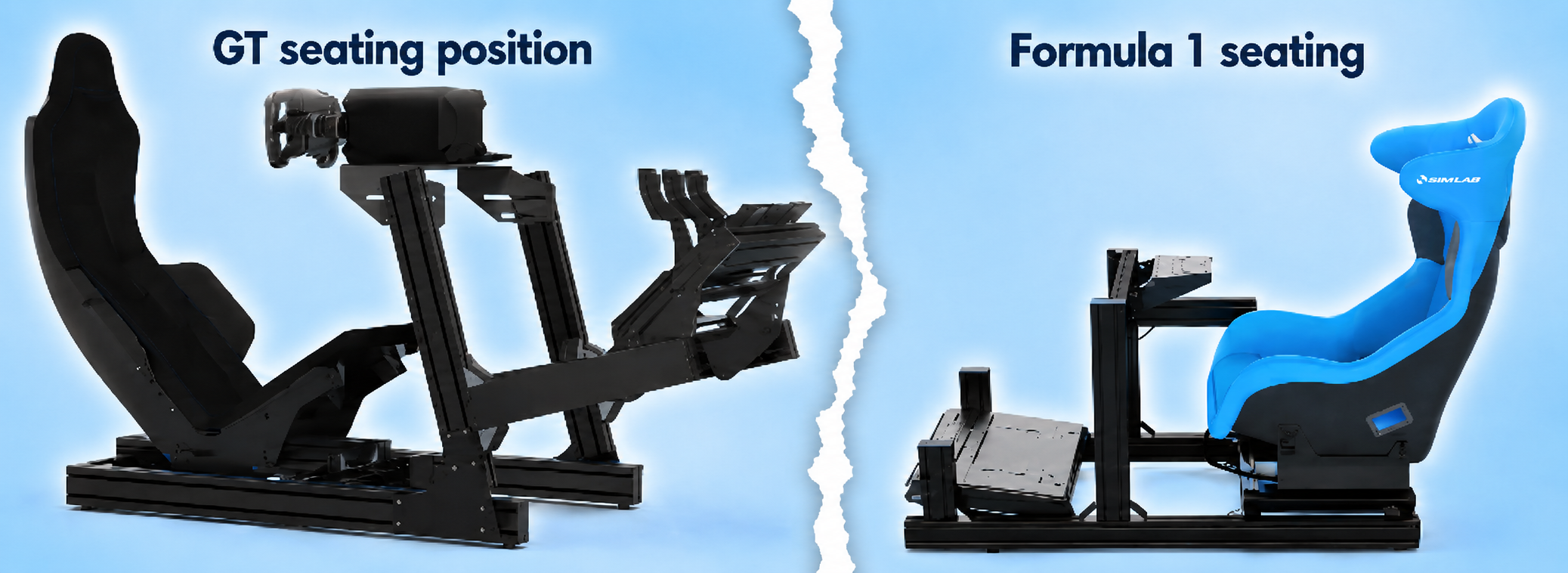
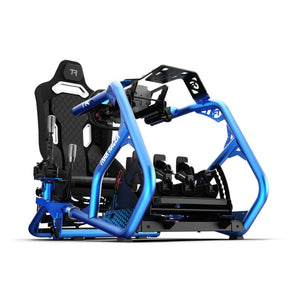
An F1 sim cockpit gives you a very different driving experience to a standard GT-style racing rig. The seat is reclined, your legs sit higher, the wheel sits closer, and the pedals need to support firmer, more controlled braking.
At Gamer Gear Direct, we've tested Formula-style racing setups in our Dandenong showroom with direct drive wheelbases, load cell pedals, monitor setups, and VR. The biggest lesson we've learned is simple: an F1 sim cockpit only feels right when the seat, pedals, wheel, and screen position work together.
This guide explains what to look for, what to avoid, and how to set up an F1 sim cockpit so it feels stable, comfortable, and genuinely useful for Formula racing at home.
This guide is based on hands-on setup experience from the Gamer Gear Direct team. In our Dandenong showroom, we've worked through Formula-style cockpit positioning with different drivers, wheelbases, pedal sets, and display layouts.
When we test an F1 sim cockpit, we look at:
Frame movement under force feedback
Pedal deck movement under heavy braking
Seat angle comfort during longer sessions
Wheel distance and shoulder position
Pedal height, angle, and heel support
Screen or VR alignment
Ease of adjustment for different driver heights
Compatibility with common sim racing hardware
We don't judge a cockpit only by how it looks. A Formula-style rig can look incredible and still feel wrong if the pedals sit too low, the wheel is too far away, or the frame flexes under braking.
The right F1 sim cockpit should help you feel locked in without forcing your body into an uncomfortable position.
Have you ever tried racing an F1 car from a standard office chair? The disconnect is ridiculous. You're fighting to stay planted during aggressive cornering, your pedal placement feels awkward, and the whole experience falls flat.
An F1 sim cockpit solves these issues by replicating the unique seating position and ergonomics of actual Formula One cars. Unlike traditional racing simulators designed around GT or touring car positions, Formula cockpits place you in that characteristic reclined, legs-elevated stance that real F1 drivers experience.
The difference isn't just about aesthetics. This positioning fundamentally changes how you interact with your equipment:
Improved muscle memory: Your body learns proper braking and steering inputs in the correct position
Enhanced force feedback response: Better leverage means you feel and react to wheel forces more naturally
Reduced fatigue: Ergonomic support lets you race longer without discomfort
Greater immersion: When your body position matches what you see on screen, your brain accepts the simulation more completely
Formula 1's partnership with manufacturers with known brands to produce officially licensed racing simulators demonstrates how seriously the sport takes simulation training. What the pros use for practice can upgrade your home setup too.
Not all Formula-style cockpits deliver the same experience. When you're researching options, certain features separate truly authentic setups from basic approximations.
The foundation of any serious sim cockpit is rock-solid construction. Formula cockpits face unique challenges because direct drive wheels generate substantial forces, and any flex in the frame undermines immersion and precision.
Premium options use aluminium extrusion profiles, typically 40mm x 80mm or larger. Steel tube construction offers another robust solution, though it's generally heavier.
Construction Type |
Rigidity |
Weight |
Adjustability |
Price Point |
|---|---|---|---|---|
Aluminium Extrusion |
Excellent |
Medium |
Highly Modular |
High |
Steel Tube |
Excellent |
Heavy |
Good |
Medium-High |
Reinforced Steel |
Very Good |
Medium-Heavy |
Moderate |
Medium |
Basic Steel |
Fair |
Medium |
Limited |
Budget |
The signature F1 driving position places your legs higher than in GT cars, with a more reclined seat angle. This mimics how Formula drivers sit in their carbon fibre tubs.
Quality F1 sim cockpit designs offer extensive adjustment ranges to accommodate different body sizes. You should be able to fine-tune:
Seat recline angle (typically 30-45 degrees for Formula positions)
Pedal deck height and angle
Wheel distance and height
Seat slider position for leg length variations
Your F1 sim cockpit needs to work with your existing or planned peripherals. Check for:
Wheel base mounting: Standard patterns include those from different brands. Premium cockpits offer universal mounting plates or multiple bolt patterns.
Pedal compatibility: Different pedal sets have varying mounting requirements. Inverted pedals need specific deck angles.
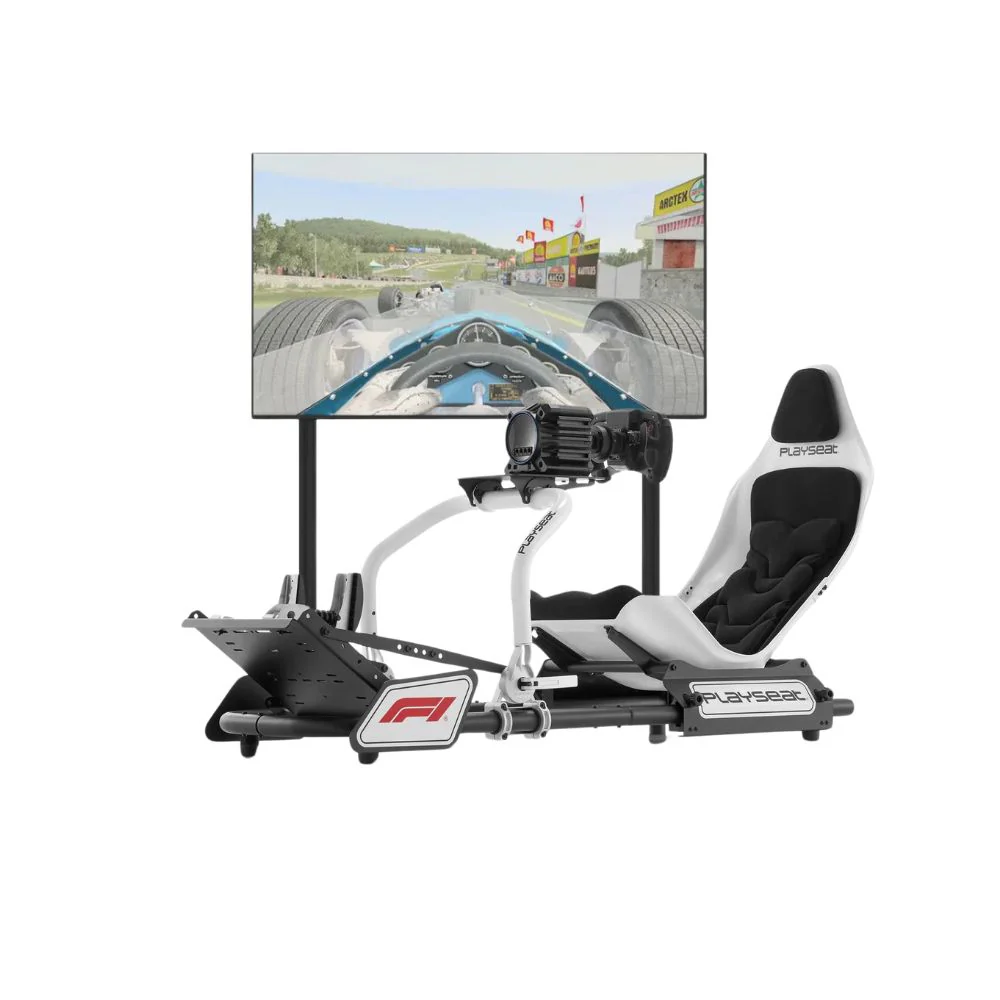
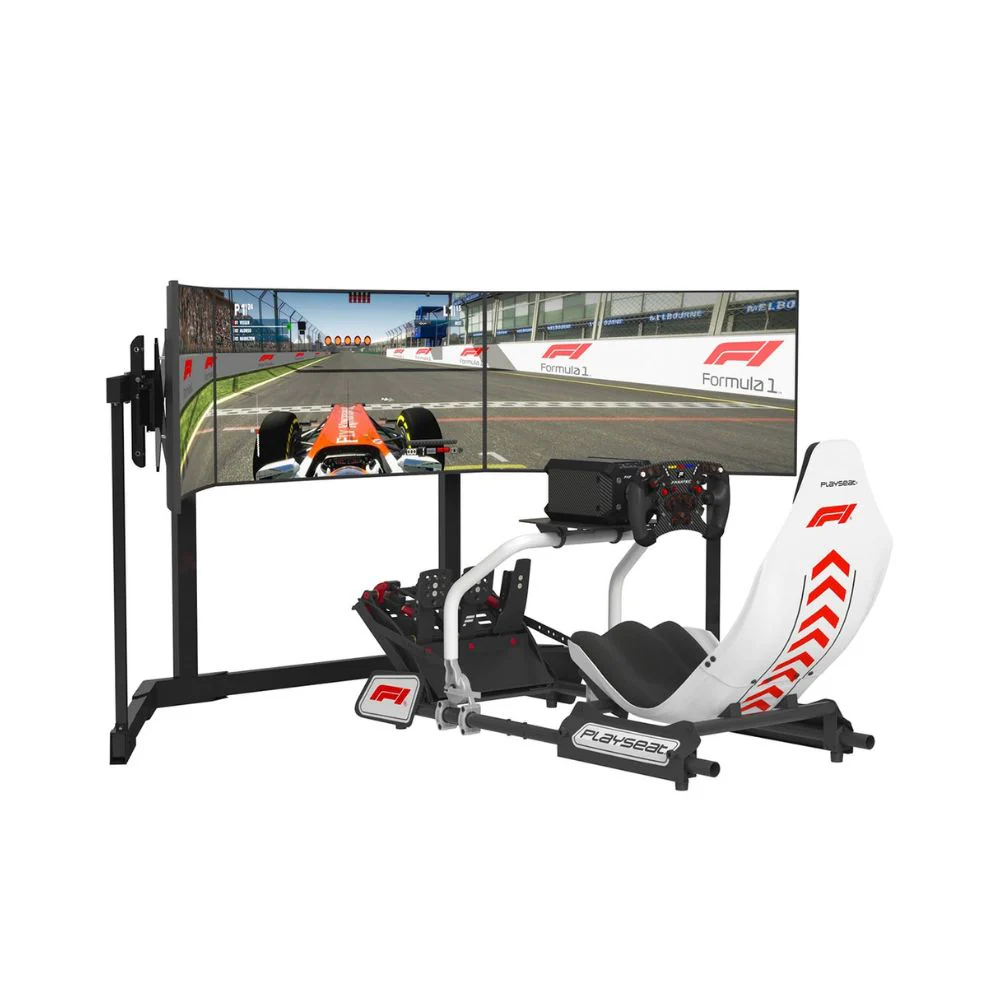
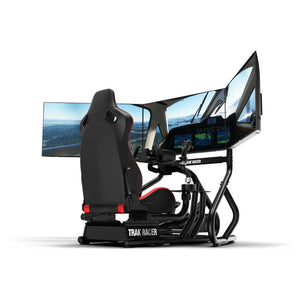
Monitor or VR integration: Formula positions work brilliantly with VR headsets, but if you prefer screens, ensure the cockpit supports your chosen display solution. Triple monitor stands or single monitor arms should integrate seamlessly.
Setting up your F1 sim cockpit properly transforms good equipment into a phenomenal experience. Let's walk through the process systematically.
Position the seat first: Start with approximately 35-40 degrees recline. You'll adjust this based on comfort, but it's a solid baseline for Formula positions.
Set pedal deck height: Your legs should be elevated so your knees are roughly level with your hips. This recreates the F1 leg position.
Adjust pedal distance: Extend your legs fully against the pedals. You want a slight bend in your knees when fully depressing the brake.
Position the wheel: With hands at 9 and 3 o'clock on the wheel, your arms should have a gentle bend. Shoulders stay against the seat when turning.
Fine-tune angles: The pedal deck angle affects how your feet naturally rest. Most drivers prefer 45-60 degrees from horizontal.
This process takes time. Don't rush it. The ultimate sim racing guide for beginners covers fundamental setup principles that apply equally to Formula cockpits.
Even experienced sim racers make positioning errors when switching to Formula cockpits. Here's what to watch for:
Sitting too upright: Don't bring GT driving habits to your F1 setup. The reclined position feels strange initially but provides better long-term comfort and realism.
Pedals too low: If your legs angle downward significantly, you're missing the characteristic F1 position. Elevate that pedal deck.
Wheel too far away: Unlike road cars, F1 steering wheels sit close to drivers. Bringing the wheel closer improves control and matches real-world positioning.
Ignoring heel support: Your heels should have clear support, not floating. This allows precise throttle modulation, especially during those delicate corner exits where F1 cars demand smoothness.
Your F1 sim cockpit provides the physical foundation, but pairing it with the right software creates truly memorable experiences.
Certain simulators deliver exceptional Formula One experiences. F1 simulator games vary in focus, from officially licensed titles to hardcore simulations.
F1 25 (and its annual iterations) offers official cars, tracks, and drivers. The handling model has improved significantly over recent years, making it genuinely rewarding on quality hardware.
iRacing provides some of the most accurate Formula car physics available. Their open-wheel content ranges from entry-level Formula Vee to full F1-spec machinery. The competitive online racing keeps you coming back.
Assetto Corsa Competizione and the original Assetto Corsa host exceptional Formula content through mods and DLC. AC's Formula Hybrid cars deliver jaw-dropping performance that showcases what your cockpit can handle.
RaceRoom Racing Experience features official Formula E content alongside various open-wheel categories, all with excellent force feedback implementation.
Your cockpit works best when paired with appropriate peripherals. Here's what complements Formula racing:
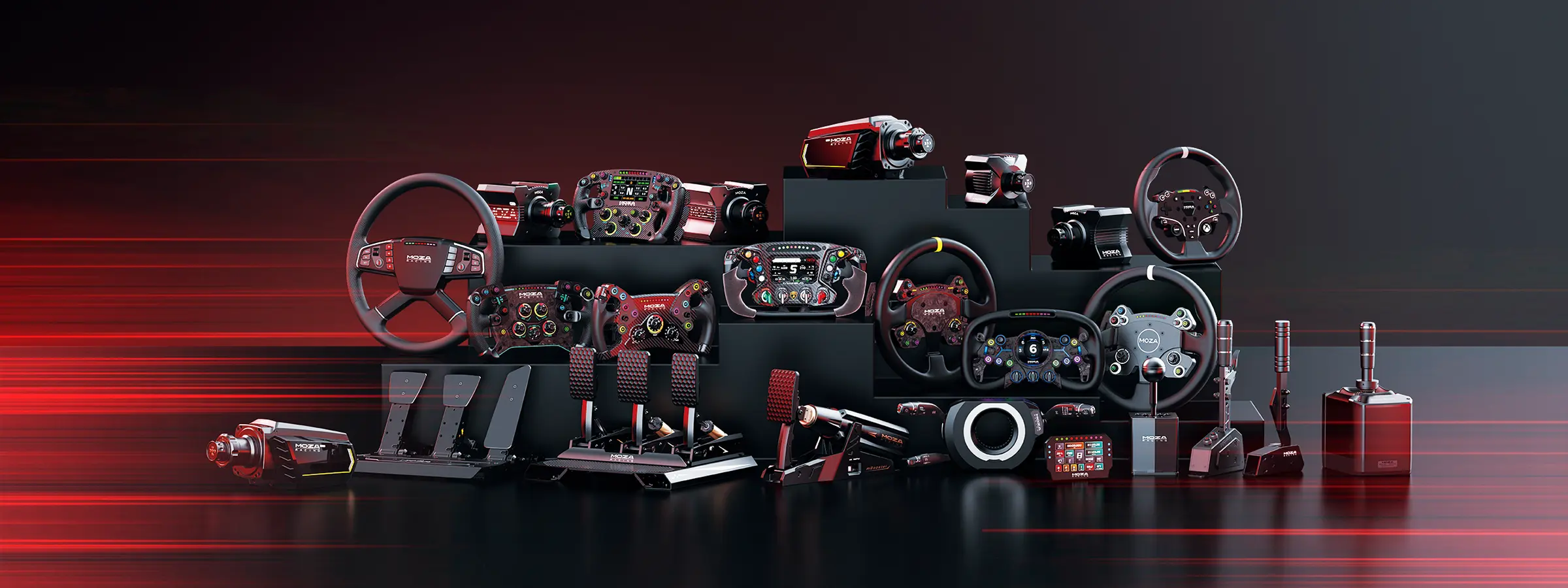
Direct drive wheelbases: Formula cars generate significant steering forces. direct drive wheels communicate track surface details that belt-driven systems miss.
Load cell brake pedals: F1 braking requires massive pressure. Load cell technology lets you brake by force rather than travel distance, matching real techniques.
Round or D-shaped steering wheels: While F1 teams use complex rectangular wheels, round or D-shaped options work brilliantly for sim racing, especially when they're 280-300mm in diameter.
Button boxes: Formula cars bristle with switches and rotaries. A button box mounted within reach lets you adjust brake bias, differential settings, and engine modes without leaving VR or glancing away from your monitors.
F1 sim cockpits span enormous price ranges. Understanding what you get at different price points helps you make informed decisions.
Starting your Formula journey doesn't require emptying your bank account. Entry-level F1 sim cockpits sacrifice some adjustability and use lighter construction, but still deliver the fundamental Formula seating position.
These typically feature:
Steel tube construction (lighter gauge than premium options)
Fixed or limited seat adjustment
Compatibility with entry and mid-range wheel bases
Folding designs for space-conscious setups
Expect some flex with powerful direct drive wheels, but for entry-level and mid-range equipment, they perform admirably.
This sweet spot delivers serious performance without professional-grade pricing. You'll find robust construction, extensive adjustability, and compatibility with high-end peripherals.
Mid-range options often include:
Aluminium extrusion or heavy-duty steel frames
Wide adjustment ranges for multiple users
Integrated monitor stands or mounting points
Premium finish quality
Top-tier F1 sim cockpits represent the pinnacle of home simulation. We're talking about equipment that wouldn't look out of place in professional driver training facilities.
Premium features include:
Competition-grade rigidity
Integrated motion systems or motion-ready platforms
Authentic team branding and endorsements
Professional-grade adjustability systems
Not everyone has dedicated sim racing rooms. Many Australian homes require creative solutions to accommodate an F1 sim cockpit without sacrificing living space.
Several manufacturers recognise space constraints. Folding F1 sim cockpits collapse for storage between sessions, typically reducing their footprint by 60-70%.
Trade-offs to consider:
Folding mechanisms add complexity and potential wear points
Setup and breakdown time (usually 5-10 minutes)
Slightly reduced rigidity compared to fixed installations
Lower weight capacity for some designs
If you're sharing space with family or need your sim racing area to serve multiple purposes, these compromises often make sense.
Some sim racers want both Formula and GT experiences. Certain cockpits offer adjustable configurations that switch between driving positions.
This versatility comes at a cost, though. Truly optimised Formula positions differ significantly from GT positions. A cockpit that converts between both may compromise slightly on each. Consider whether you'll actually use both positions or if you're primarily interested in Formula racing.
For those curious about other racing simulator options, our guide to best racing simulator cockpits covers various styles and configurations.
Once you've got your F1 sim cockpit dialled in, several additions can push immersion even further.
Motion platforms transform static sim racing by adding physical movement. They pitch, roll, and heave in response to on-track forces.
Motion simulator technology has advanced dramatically, with options ranging from simple belt tensioners to full six-degree-of-freedom platforms. The ultimate guide to motion sim racing explores how these systems work with Formula cockpits.
For F1 racing specifically, motion adds:
Physical feedback during hard braking
Sensation of weight transfer through corners
Kerb impacts and track surface changes
Acceleration and deceleration forces
Motion systems require compatible cockpits. If you're planning to add motion later, verify your chosen F1 sim cockpit supports it.
Your senses work together to create immersion. Beyond the cockpit itself, consider:
Bass shakers: These transducers mount to your cockpit and vibrate in response to low-frequency audio. Engine rumble, gear changes, and impacts become physical sensations.
Surround sound: Positional audio helps you hear competitors approaching, especially important in VR where you can't rely on mirrors as easily.
VR headsets: Formula cockpits work beautifully with virtual reality. The elevated leg position feels natural, and VR's depth perception helps judge braking points and corner apex positioning. Check out Australia's best VR headsets for current options.
Triple monitors: If VR isn't your preference, triple screens provide excellent peripheral vision. Ultra-wide displays offer another alternative, though the vertical field of view can feel limited for Formula racing.
When we help customers test an F1 sim cockpit in our Dandenong showroom, we don't start by chasing the most aggressive seating angle. We start with control and comfort.
Here's the setup process we use:
Set the seat recline first. Start with a comfortable Formula-style angle, not the most extreme one.
Raise the pedal deck. Your legs should sit higher than a normal GT position.
Set pedal distance. At full brake pressure, your knees should still have a slight bend.
Bring the wheel closer. Your shoulders should stay against the seat when turning.
Check wrist position. With your arms forward, your wrists should sit comfortably near the top of the wheel.
Test braking pressure. Push the brake hard and check for frame or pedal deck movement.
Check screen or VR alignment. Your view should match the cockpit position, not force you to look up or down.
Do a short drive. Comfort problems often show up after a few laps, not while sitting still.
A properly adjusted F1 sim cockpit should feel secure. You shouldn't need to grip the wheel to hold your body in place, and you shouldn't feel like you're sliding or stretching to reach the controls.
Your investment deserves proper care. F1 sim cockpits require minimal maintenance, but regular attention keeps them performing optimally.
Every few months, inspect your cockpit for:
Bolt tightness: Vibrations and forces gradually loosen hardware. A quick check with an Allen key set prevents issues.
Slider mechanisms: If your cockpit uses sliders for adjustment, keep them clean and occasionally lubricate with dry lubricant.
Wear points: Seat fabric, padding, and contact surfaces eventually show wear. Address issues early to prevent deterioration.
Frame integrity: Check welds and joints for cracks or stress signs, especially if you're running powerful force feedback.
Australian conditions present specific challenges:
Humidity control: Coastal areas experience higher humidity. If your sim racing space lacks climate control, consider dehumidifiers to prevent corrosion on metal components.
Sun exposure: Direct sunlight fades fabrics and degrades plastic components. Position your cockpit away from windows or use blackout solutions.
Dust management: Regular dusting prevents buildup in adjustment mechanisms and electronic connections. Compressed air works brilliantly for hard-to-reach areas.
If possible, experience Formula cockpits before purchasing. Some sim racing communities host meetups where members showcase their setups. Arcade racing venues occasionally feature high-end simulation equipment.
Sitting in a proper F1 sim cockpit, even briefly, clarifies whether the reclined position suits you. While most people adapt quickly, knowing for certain prevents expensive mistakes.
For comprehensive guidance on building your complete setup, explore the full racing simulator setup guide covering everything from cockpits to peripherals.
An F1 sim cockpit is worth it if Formula racing is your main focus and you want a driving position that feels closer to open-wheel racing. The reclined seat, raised pedals, and close wheel position can make F1-style racing feel more natural, more controlled, and more immersive.
It's not the best choice for every driver. If you mostly race GT, rally, drifting, or road cars, a GT cockpit or hybrid rig may suit you better. But if you spend most of your time in Formula cars, an F1 sim cockpit gives you a stronger foundation for the experience you want.
The best F1 sim cockpit is the one that fits your body, supports your hardware, suits your space, and stays solid under braking and force feedback.
For help choosing a complete setup, explore our F1 racing simulator packages or visit the Dandenong showroom to test a Formula-style position in person.