


Top 7 Simulator Cockpits for Realism, Budget and Comfort
|
|
A simulator cockpit changes how much detail you feel through the wheelbase, how repeatable your braking feels, and how comfortable you stay during longer racing sessions.
Our team has tested and inspected a wide range of racing rigs through our Dandenong South showroom, including compact foldable seats, Formula-style chairs, tubular steel rigs and aluminium profile platforms. For this guide, we looked at how each simulator cockpit handles direct drive force feedback, pedal pressure, driver fit, adjustability, space requirements and long-term upgrade potential.
If you're building your first setup or replacing a wheel stand, the right simulator cockpit can make your racing gear feel more stable, more natural and easier to use. The wrong one can introduce flex, awkward posture and upgrade limits you’ll notice every time you drive.
You can also browse our racing simulator cockpits if you want to compare current models.
We assessed each simulator cockpit using the same core criteria: frame rigidity, pedal plate stability, seating position, wheel deck adjustment, hardware compatibility, assembly complexity, accessory support and room fit.
In showroom testing, the main difference between an entry-level cockpit and a premium frame becomes obvious once you add stronger hardware. A cockpit that feels stable with an entry-level wheel can start to move once you add a direct drive wheelbase and load cell pedals. That movement can make steering feel less precise and braking less repeatable.
We also looked at how easy each simulator cockpit is to live with. Some drivers want a fixed aluminium rig for a dedicated room. Others need a foldable cockpit for a shared space. Some want GT positioning, while others want Formula-style recline.
Our recommendations are based on how these cockpits work in real setups, not just how they read on a spec sheet.
Frame rigidity was the first test. We looked for unwanted movement through the wheel deck, uprights and pedal plate during repeated steering and braking inputs.
Comfort was next. A simulator cockpit needs to support your back, shoulders and legs during long sessions, especially if you drive endurance races or spend hours practising.
Adjustability also played a major role. Seat distance, pedal reach, wheel height and wheel angle all affect your posture. The best cockpit for shared use gives different drivers enough range to get settled quickly.
Compatibility was another key point. We looked at support for popular direct drive wheelbases, pedals, shifters, handbrakes, monitor mounts and motion add-ons.
Upgrade path rounded out the testing. A simulator cockpit that accepts extra mounts, monitor stands, bass shakers or motion hardware gives you more room to grow as your setup changes.
A great simulator cockpit starts with rigidity. When the frame moves, the wheelbase and pedals can’t give you the cleanest feedback. Direct drive wheels expose flex quickly, so a stable wheel deck and pedal plate are essential if you’re planning to run stronger hardware.
Pedal stability is just as important. Load cell and hydraulic pedals rely on pressure, not just travel. If the pedal plate flexes every time you brake, your muscle memory suffers. A good simulator cockpit keeps the pedal base solid so your braking becomes more consistent.
Driving position is the next major factor. GT drivers usually prefer a more upright seat with easier access to the shifter and handbrake. Formula drivers usually want a reclined position with raised pedals. A hybrid simulator cockpit gives you more flexibility if you play different racing titles or share the rig with other drivers.
Comfort also needs proper attention. Seat shape, back support, shoulder support and leg angle all affect how long you can race before fatigue sets in. A cockpit can feel exciting for ten minutes and still be uncomfortable after an hour.
Finally, look at the upgrade path. If you plan to add triple monitors, a shifter, handbrake, button box, bass shaker or motion system, choose a simulator cockpit with enough mounting support from the start.
For Australian sim racers, local availability and support can make a big difference. Large simulator cockpit frames are bulky, so shipping time, freight handling and replacement part access should be part of the buying decision.
Space also needs planning. A foldable cockpit can work in a lounge room or apartment, while a large aluminium profile cockpit is better suited to a spare room, garage or dedicated sim room. Before buying, measure the full footprint with the seat, pedals, wheelbase and monitor position included.
At our Dandenong South showroom, the most common buying mistake we see is choosing a cockpit only for today’s wheel and pedals. If you already know you’ll move to a direct drive wheelbase or firmer pedals later, start with a simulator cockpit that can handle those upgrades.
Best for: most drivers building a long-term aluminium profile setup.
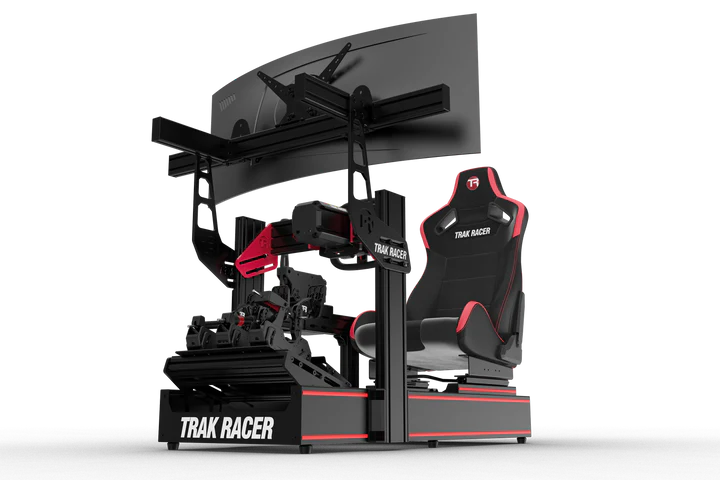
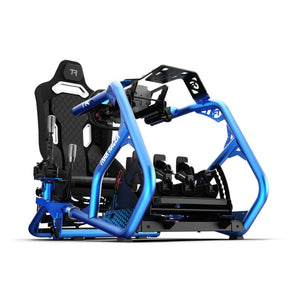
The Trak Racer TR120S is our best overall simulator cockpit pick because it gives you the right mix of rigidity, adjustability and upgrade support without jumping straight to the heaviest premium frame.
Its 120 x 40 mm aluminium profile base gives it the stiffness needed for direct drive wheelbases and firmer pedal sets. In our testing, the TR120S felt like the right step for drivers moving beyond a basic wheel stand or lighter cockpit. It gives you a more planted steering platform and a pedal setup that feels more repeatable under pressure.
The included wheel mount offers angle and reach adjustment, so it’s easier to get the rim into a natural position. Underfoot, the pedal mounting options give you room to set up GT-style or more reclined ergonomics, depending on your seat and pedal layout.
The TR120S is also a smart choice if you want to expand later. It supports shifter mounts, handbrake mounts, monitor stands, keyboard trays and other accessories from the Trak Racer ecosystem.
The trade-off is space. This simulator cockpit needs a dedicated area, and it takes more planning than a compact chair. If you’ve got the room, it’s the one we’d recommend to most buyers who want a stable platform they won’t outgrow quickly.
Best for: premium direct drive builds, motion setups and high-load pedal systems.
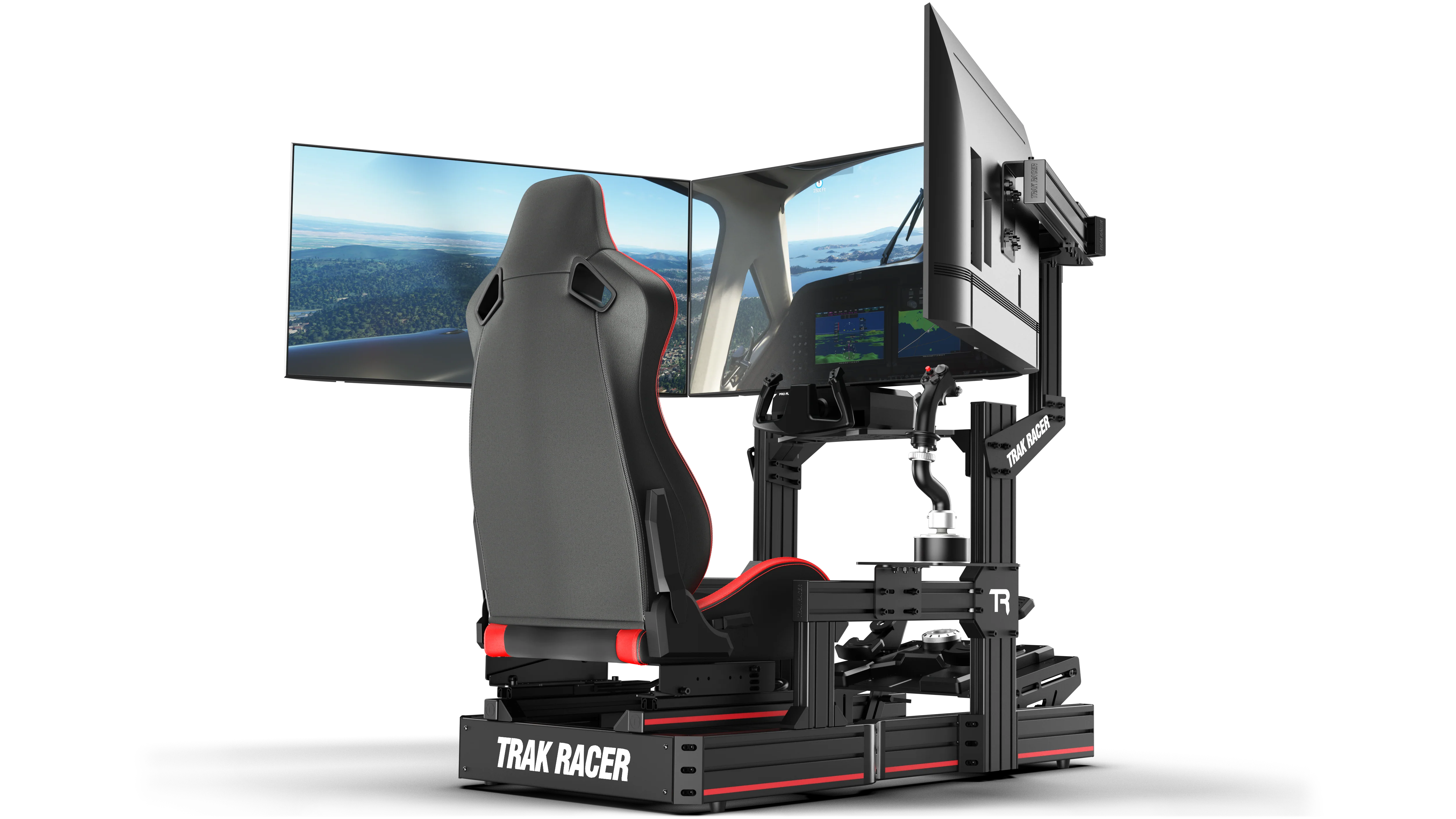
The Trak Racer TR160 is the heavy-duty choice for drivers who want maximum frame strength. It uses a larger 160 x 40 mm aluminium profile chassis with reinforced uprights and heavy-duty brackets, giving it a very solid feel under high torque and heavy braking.
When testing a simulator cockpit for premium hardware, we look for movement in three places: wheel deck, pedal plate and seat base. The TR160 is built to minimise movement across all three. That makes it well suited to stronger direct drive wheelbases, load cell pedals, hydraulic pedals and more advanced racing simulator accessories.
It’s pre-drilled for major wheels, pedals and shifters, and it gives you plenty of room for upgrades. For drivers who plan to add triples, motion, bass shakers, button boxes or a dedicated shifter and handbrake layout, the TR160 gives you the strongest platform in this list.
The downside is that it’s more cockpit than many casual drivers need. It costs more, weighs more and takes up more room. If you’re running entry-level hardware, you won’t use everything this simulator cockpit can offer. If you’re planning a high-end build, though, it’s the pick with the most headroom.
Best for: drivers who switch between GT and Formula-style racing.
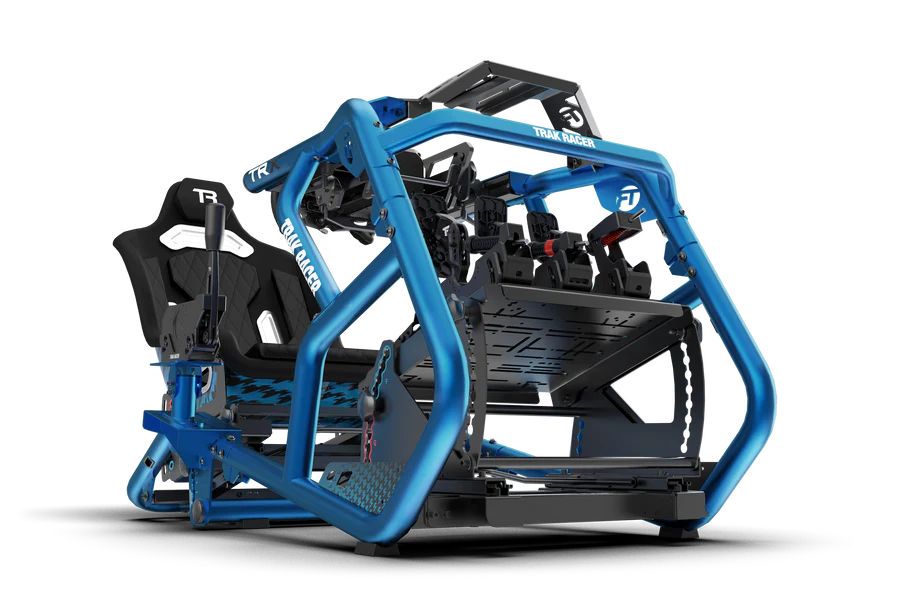
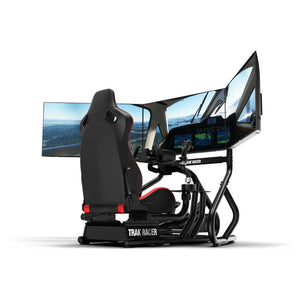
The Trak Racer TRX stands out because it gives you both GT and Formula-style seating in one simulator cockpit. It was co-developed with Alpine F1 engineers and uses a hybrid seat and frame layout that lets you move between a more upright GT position and a reclined single-seater position.
In showroom use, that flexibility is the key reason to choose it. Many drivers enjoy F1 games but still spend plenty of time in GT3, touring cars or road cars. A fixed Formula cockpit can feel restrictive for mixed racing, while a fixed GT cockpit doesn’t give the same single-seater feel. The TRX gives you a middle ground.
The tool-free wheel deck adjustment, adjustable pedal system and hybrid seating setup make it easier to change posture without pulling the whole rig apart. The pedal system is also designed for high braking loads, which is important if you’re using firmer pedals.
The TRX isn’t the most compact simulator cockpit in this guide, and it won’t suit buyers who only want a simple GT position. It’s best for drivers who want one cockpit for multiple racing styles and who value fast position changes.
Best for: aluminium profile performance on a tighter budget.
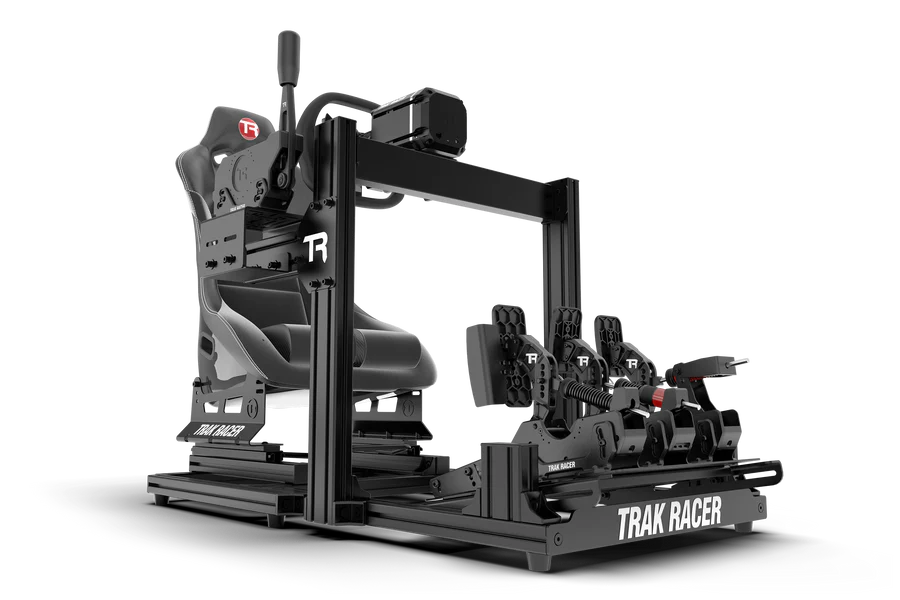
The Trak Racer TR40S is a compact aluminium profile simulator cockpit built around a 40 x 40 mm base with larger 40 x 80 mm wheel uprights. It’s not as heavy-duty as the TR120S or TR160, but it gives you the main advantages of aluminium profile construction at a lower entry point.
During testing, the TR40S felt like a good fit for mid-range direct drive wheelbases and drivers who want a tidy, adjustable cockpit without taking over an entire room. The side-mounted uprights and corner brackets give the wheel deck good support for the size of the frame.
The pedal system is another strong point for the price. The carbon-steel pedal plates are pre-drilled for major pedal sets and can be adjusted for different angles. That gives you a better driving posture than many basic cockpits.
The trade-off is upgrade headroom. If you’re already planning a high-torque wheelbase, hydraulic pedals and motion add-ons, the TR120S or TR160 is the better long-term buy. If you want a stable simulator cockpit for a growing home setup, the TR40S makes a lot of sense.
Best for: Formula fans who want an authentic single-seater position.
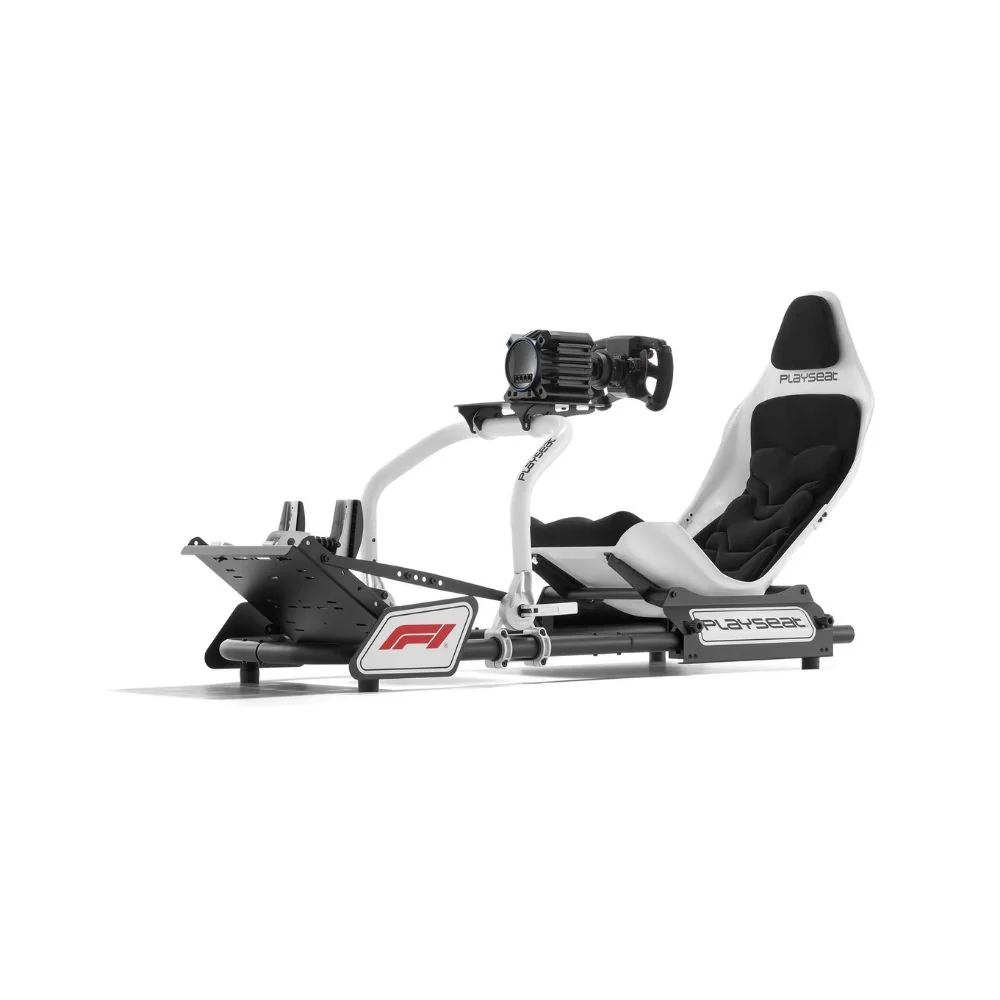
The Playseat Formula Instinct F1 Edition puts you in a low, reclined Formula-style position. Instead of trying to cover every driving style, this simulator cockpit focuses on giving F1 fans a more authentic posture for open-wheel racing.
The seating position changes how you interact with the wheel and pedals. Your legs are more extended, your back is more reclined, and the wheel position feels closer to a single-seater layout than a standard desk or GT cockpit.
The Modufoam modular padding gives you ways to adjust shoulder and lower-back support, which is valuable for longer sessions. The X-Adapt quick-release steering system is designed to keep the wheel support stable, and the pedal mounting system gives you adjustment for angle, height and distance.
The Formula Instinct suits drivers who mainly play F1 or open-wheel titles. It’s less flexible for GT, rally or road car driving, and it’s not the best pick if multiple people with very different preferences will share the same rig.
Best for: premium F1-style immersion with integrated monitor mounting.
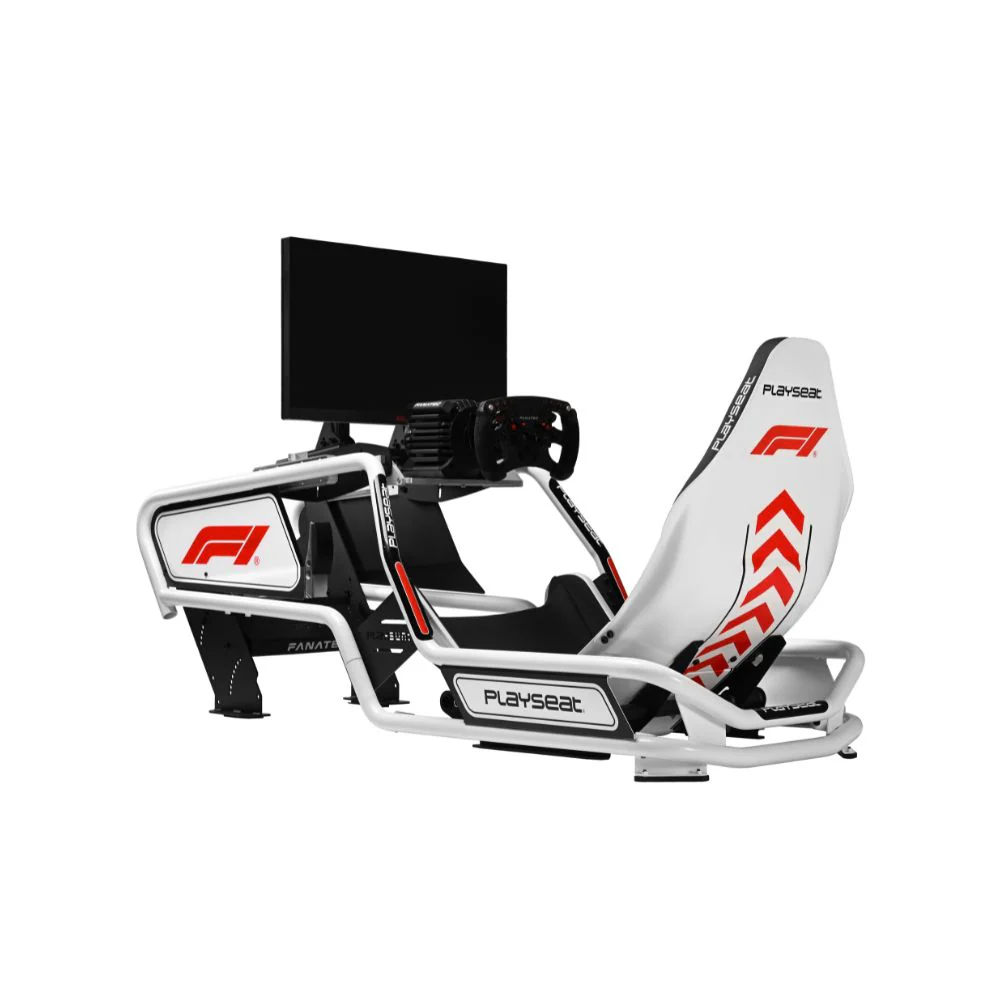
The Playseat Formula Intelligence F1 Edition is built for drivers who want a more complete single-seater experience. It delivers a reclined F1-style driving position, strong wheel and pedal mounting, and an integrated VESA monitor mount that brings the screen into the cockpit layout.
That integrated monitor mount is a major point of difference. In testing and showroom setup planning, screen placement often has a big impact on immersion. When the monitor is too far away or too high, corner entry and braking markers feel less natural. The Formula Intelligence keeps the display closer to the driving position, which can make the setup feel more like a single unit.
The ForceLock adjustment system gives you smooth seat and wheel positioning, and the cockpit is designed for direct drive wheelbases and firm pedal input. It’s also a visually impressive simulator cockpit, especially for buyers who want an official F1-style centrepiece.
The drawback is versatility. It’s made for Formula-style racing first. If you regularly jump between GT, rally and trucking titles, an aluminium profile cockpit gives you more flexibility. If F1 is the main focus, this is the more immersive Playseat option.
Best for: compact rooms, foldaway storage and Formula-style seating.
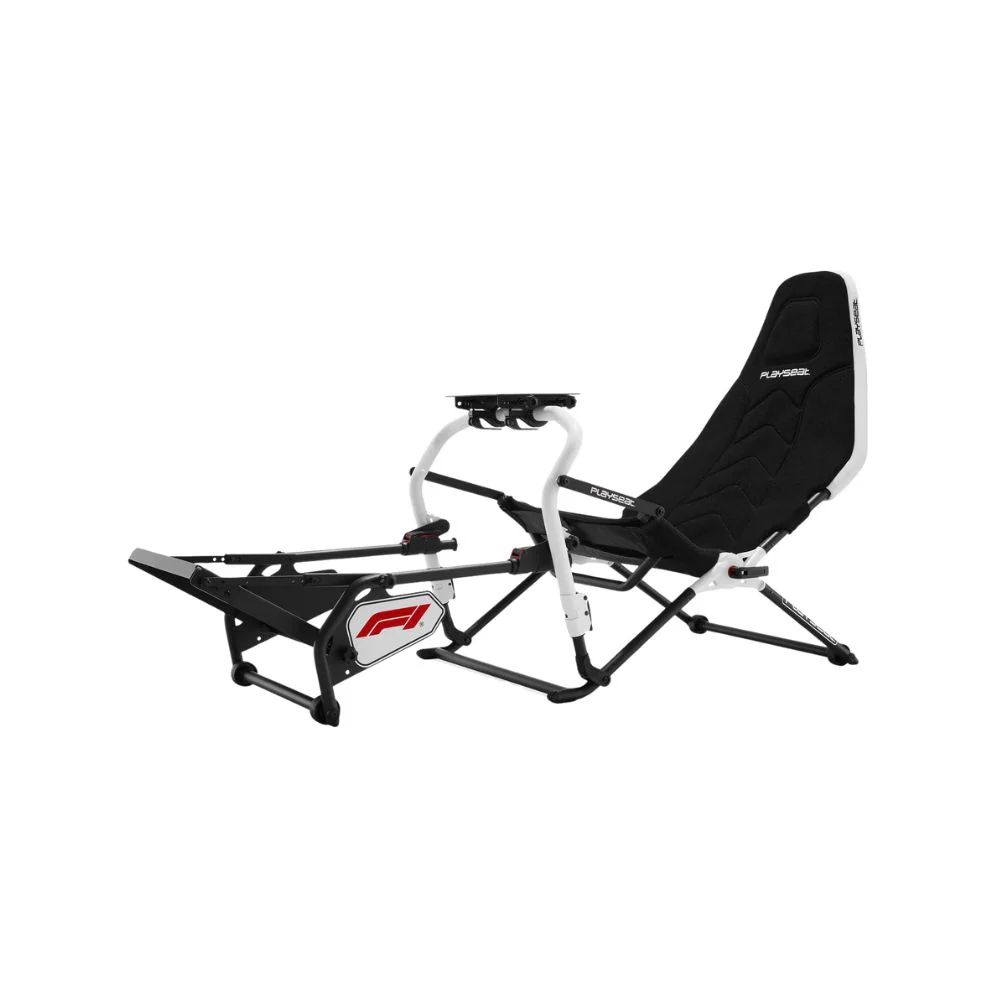
The Playseat Challenge DD F1 Edition is the easiest simulator cockpit in this guide to live with if you don’t have a dedicated room. It gives you a Formula-style seating position, supports higher-performance wheel and pedal hardware, and folds away when the session ends.
For apartments, shared spaces and multipurpose rooms, that storage advantage is huge. You can keep your wheel and pedals attached, move the chair on built-in castors and store it upright instead of leaving a full-size cockpit in the middle of the room.
The high-carbon steel frame gives it more stability than older lightweight chair-style designs, and the adjustable seat depth, firmness and backrest angle make it more comfortable than many compact options.
It still has limits. A foldable simulator cockpit won’t give you the same frame stiffness, accessory ecosystem or long-term expansion as a full aluminium rig. If you plan to add triples, motion hardware or a heavy shifter layout, choose a fixed frame. If space is the main challenge, the Challenge DD F1 Edition is the most convenient Formula-style option here.
Simulator Cockpit |
Best For |
Frame Style |
Main Strength |
Main Trade-Off |
|---|---|---|---|---|
Trak Racer TR120S |
Most direct drive home setups |
120 x 40 mm aluminium profile |
Best all-round balance of rigidity and upgrade support |
Needs dedicated space |
Trak Racer TR160 |
Premium direct drive and motion builds |
160 x 40 mm aluminium profile |
Highest rigidity and upgrade potential |
More expensive and larger |
Trak Racer TRX |
GT and Formula switching |
Tubular steel hybrid frame |
Fast position changes and strong pedal support |
Not as compact as simpler rigs |
Trak Racer TR40S |
Value-focused aluminium builds |
40 x 40 mm aluminium profile |
Good stiffness for the price |
Less headroom than larger profile rigs |
Playseat Formula Instinct F1 Edition |
F1 and open-wheel driving |
Formula-style fixed cockpit |
Authentic single-seater posture |
Less flexible for GT and rally |
Playseat Formula Intelligence F1 Edition |
Premium F1 immersion |
Formula-style cockpit with VESA mount |
Integrated monitor position and direct drive support |
Formula-focused layout |
Playseat Challenge DD F1 Edition |
Small spaces and storage |
Foldable steel frame |
Stores away after use |
Less expandable than fixed rigs |
Start with your wheelbase. If you’re using an entry-level wheel, a lighter simulator cockpit can work well. If you’re using a direct drive wheelbase, frame stiffness becomes much more important. Stronger force feedback can reveal movement in the wheel deck and uprights.
Then look at your pedals. Load cell and hydraulic pedals need a stable pedal plate because you’re pushing against pressure. If you brake hard and the plate moves, your inputs become harder to repeat. Drivers upgrading pedals should choose a simulator cockpit with a reinforced pedal mount.
Your driving style should also guide the decision. GT racing works best with a more upright position. F1 games feel better in a reclined Formula-style seat. Rally and drifting setups often need easier access to a shifter and handbrake. If you drive many styles, a hybrid or aluminium profile cockpit gives you more setup options.
Room size is just as important as budget. Measure the full length and width of the simulator cockpit, then allow extra space behind the seat and around the pedals. Also think about monitor position. A cockpit and monitor stand can take up more room than expected.
If you want the easiest long-term path, choose an aluminium profile cockpit. It gives you the most freedom to add accessories, adjust mounting points and rebuild the layout as your gear changes.
One of the biggest mistakes is mounting the wheel too high. Your shoulders can fatigue quickly if the wheel sits above a natural steering position. Aim for a height that lets your arms stay relaxed with a slight bend at the elbows.
Another common issue is placing the pedals too close. If your knees are too bent under braking, you’ll struggle with control and comfort. If they’re too far away, you’ll overreach and lose pressure consistency.
We also see plenty of rigs with loose bolts after the first few sessions. A new simulator cockpit can settle slightly once it’s used under load, so it’s worth checking bolts again after the first week.
Cable routing gets overlooked too. Keep wheelbase, pedal and shifter cables away from sliding seat rails, pedal movement and any future motion components. Clean cable routing makes maintenance easier and lowers the chance of disconnects mid-race.
Gamer Gear Direct works with simulator cockpit setups, direct drive wheelbases, pedal sets, monitor stands and complete racing simulator packages every week. Our Dandenong South showroom gives customers a place to inspect selected racing simulator setups by appointment, compare cockpit styles and understand how different frames suit different hardware.
The recommendations in this guide come from hands-on testing, showroom setup experience, customer compatibility questions and real conversations with Australian sim racers. We’re not just comparing product photos. We’re looking at how each simulator cockpit performs once wheels, pedals, seats and accessories are installed.
For most Australian sim racers, the Trak Racer TR120S is the best all-round simulator cockpit because it gives you the rigidity and upgrade path most home setups need. If you’re building a premium direct drive or motion-ready setup, move to the TR160. If you want one cockpit for GT and Formula-style racing, the TRX is the more flexible choice.
For tighter budgets, the TR40S gives you aluminium profile adjustability without going too large. For F1 fans, the Playseat Formula Intelligence and Formula Instinct deliver a more authentic single-seater position. If storage is the main issue, the Playseat Challenge DD F1 Edition gives you a foldable simulator cockpit with a much smaller home footprint.
The best simulator cockpit is the one that fits your gear, your body, your room and your upgrade plans. Get those four things right and your wheelbase, pedals and screen will all feel more connected every time you race.