

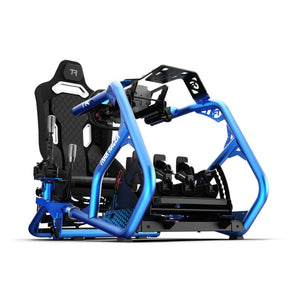
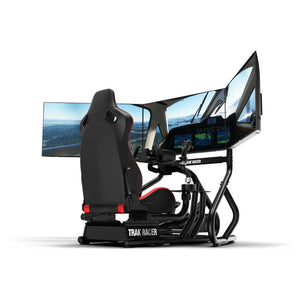


The Only Guide You Need For Simucube Direct Drive Wheelbases
|
|
When you're serious about sim racing, you quickly discover that not all wheelbases are created equal. The difference between a gear-driven wheel and a direct drive system is like comparing a go-kart to a Formula 1 car.
That's where Simucube comes into the conversation. This Finnish manufacturer has built a reputation for creating some of the most precise, powerful, and realistic direct drive wheelbases in the simulation racing world.
Whether you're just starting to explore professional-grade equipment or you're ready to upgrade from your entry-level setup, understanding what makes these systems special can help you make the right investment for your racing journey.
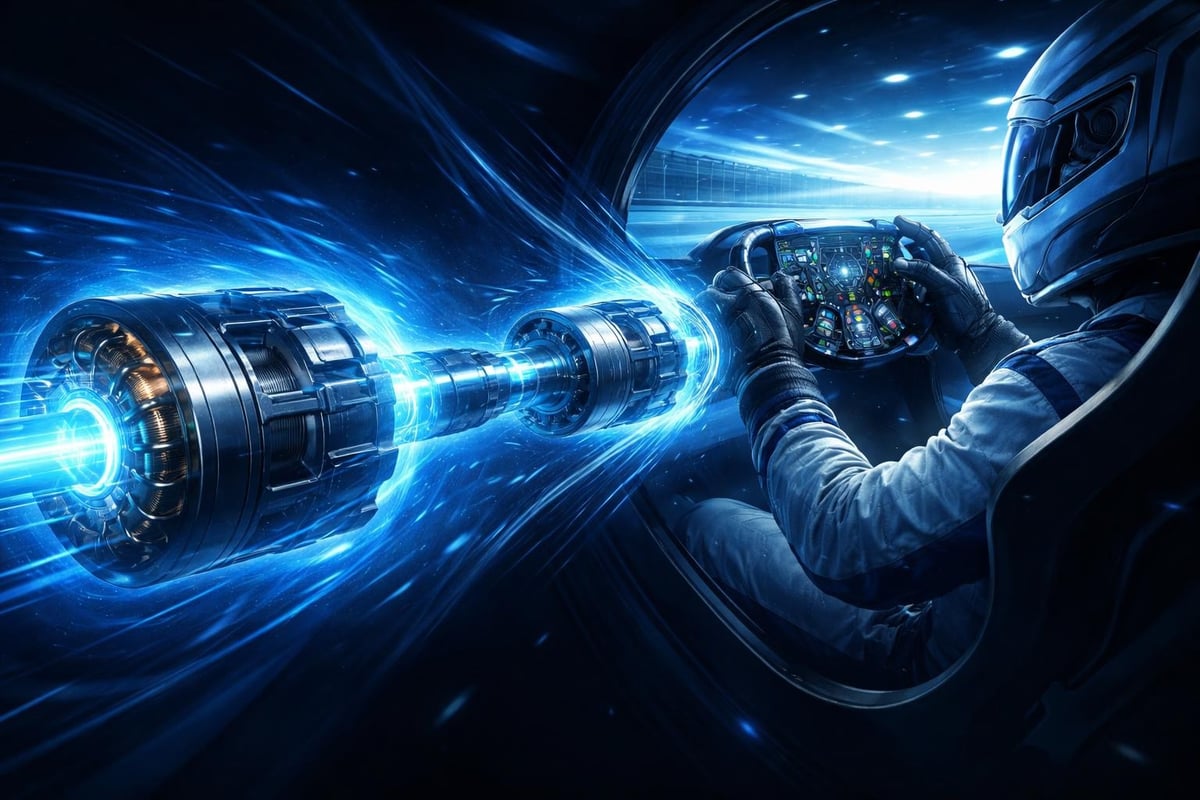
Direct drive wheelbases eliminate the belt, pulley, and gear systems found in traditional wheels, connecting the motor directly to the steering shaft. This design creates an unfiltered connection between you and the virtual track.
Think about it this way: every bump, kerb strike, and loss of traction gets transmitted through the wheel with zero mechanical translation loss. You're feeling exactly what the simulation software is calculating, nothing more, nothing less.
Simucube uses high-torque servo motors originally designed for industrial applications. These aren't gaming peripherals adapted from consumer electronics; they're precision instruments repurposed for simulation.
Key advantages of this approach include:
Zero cogging or notchiness in the rotation
Instant response times measured in milliseconds
Consistent force delivery across the entire rotation range
Minimal heat generation even during extended sessions
The detailed technical specifications reveal torque ratings from 12Nm up to 25Nm in the latest models. But here's what that actually means for your driving: you can feel individual tyre slip angles, weight transfer during braking, and subtle changes in road surface texture.
The True Drive software ecosystem sets these wheelbases apart from competitors. You're not stuck with preset profiles or limited adjustment options.
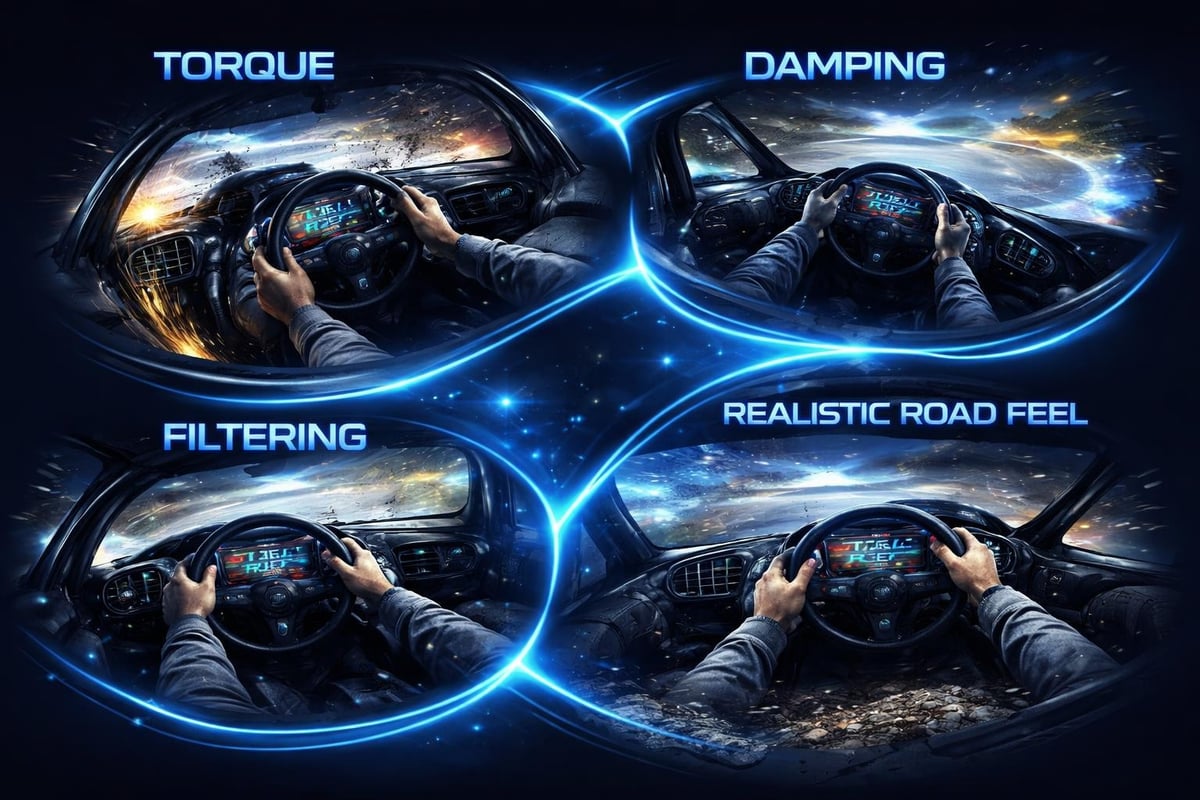
Every aspect of force feedback can be tuned:
Overall force strength - Scale the torque to match your preference
Damping and friction - Adjust the mechanical feel
Torque bandwidth limit - Filter high-frequency oscillations
Reconstruction filter - Fine-tune signal processing
For racers who want to dive deeper, the Simucube online guide provides comprehensive documentation on advanced settings. You can create different profiles for various cars, tracks, or simulation platforms.
Not everyone needs 25Nm of torque ripping their arms off. Your choice should match your experience level, physical setup, and racing goals.
Starting with a Sport model gives you genuine direct drive performance without the overwhelming power that can actually detract from learning proper technique. At 12-17Nm, you're getting more than enough force for accurate feedback.
Feature |
Benefit for New DD Users |
|---|---|
12-17Nm torque |
Manageable power while learning |
Full wireless capability |
Cleaner cockpit setup |
Same software as flagship |
Access to all tuning options |
This level works brilliantly for drivers transitioning from belt or gear systems. You'll immediately notice the detail improvement without fighting the wheel during every corner.
The Pro series targets serious hobbyists and semi-professional racers. With 17-25Nm available, you're entering championship-level equipment territory.
Here's where it gets interesting: many professional sim racers don't run their wheels at maximum torque. They're using the headroom for dynamic range and precision, not just brute strength.
Consider the Pro series if you:
Race multiple hours weekly
Compete in online leagues or championships
Want equipment that won't need upgrading
Have a sturdy sim racing cockpit that can handle higher forces
The Ultimate represents the absolute peak of consumer direct drive technology. These units appear in professional team simulators and driver training facilities worldwide.
At 35Nm, you're well beyond what most people can safely handle for extended periods. But the engineering refinements go deeper than just torque numbers.
Premium servo motors with tighter tolerances deliver even smoother operation. The sensor resolution increases, capturing more subtle inputs. And the overall build quality ensures these systems can run 24/7 in commercial environments.
You've made the investment, now let's make sure you're getting the full benefit from your hardware.
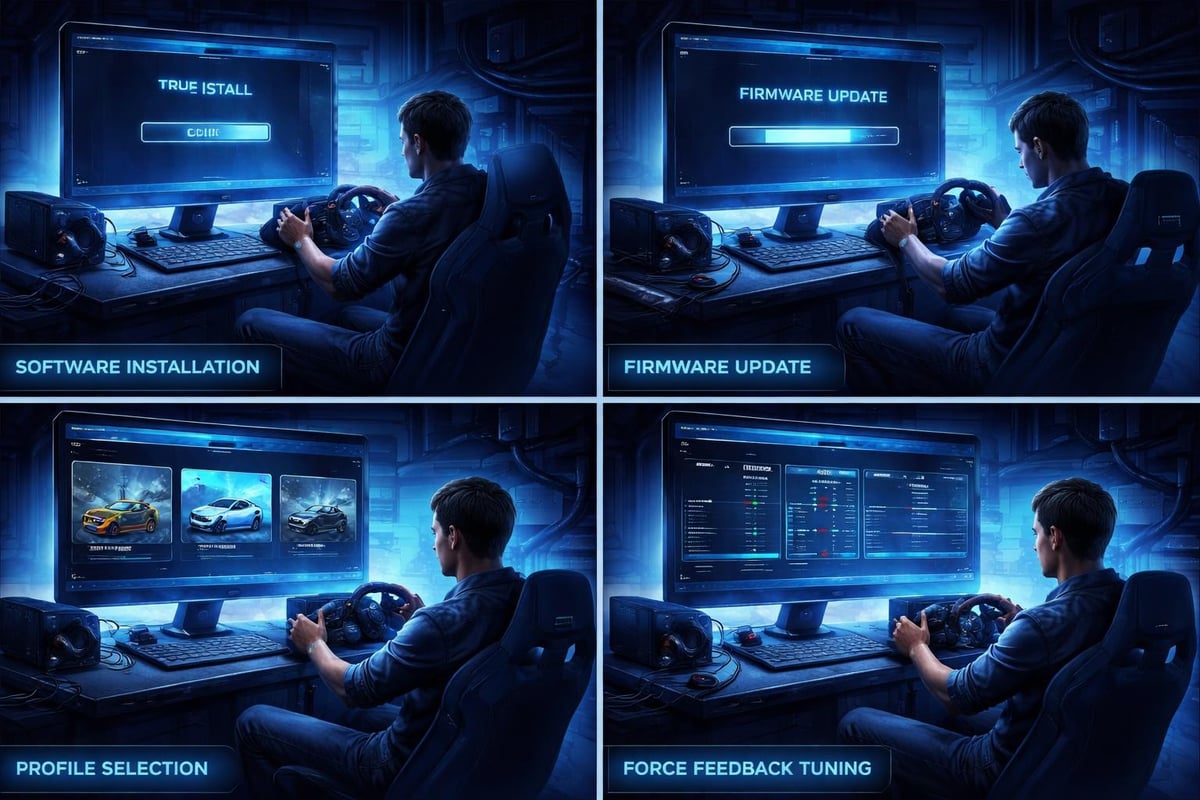
The physical installation is straightforward, but software setup requires attention. Download the latest True Drive software and firmware from the Simucube downloads page before connecting your wheelbase.
Step-by-step first-time setup:
Install True Drive software on your PC
Connect the wheelbase via USB (yes, just USB)
Update firmware if prompted
Configure your wireless settings (if applicable)
Calibrate the centre position
Set initial force levels conservatively
Start with lower force settings than you think you need. Seriously. Running too much torque initially can mask the details you've paid to experience. You can always increase forces once you've developed the muscle memory.
Your wheelbase mounting directly affects force feedback fidelity. Any flex in your rig translates to lost detail and potential oscillation issues.
The mounting plate needs a solid connection to a rigid cockpit. Many Australian sim racers pair their wheelbases with aluminium profile rigs specifically because they provide the necessary rigidity.
Mounting Type |
Suitability |
Notes |
|---|---|---|
Desk clamp |
Not recommended |
Flex creates instability |
Wheel deck with flex |
Poor |
Defeats precision benefits |
Rigid aluminium profile |
Excellent |
Ideal foundation |
Full steel chassis |
Excellent |
Professional-grade stability |
Think about ergonomics too. The wheel height and distance should position your arms at a natural angle, similar to a real car's seating position.
A wheelbase is just one component of your complete simulation environment. Let's talk about the ecosystem that maximises your investment.
You wouldn't pair a high-end wheelbase with budget pedals any more than you'd put economy tyres on a sports car. The fidelity mismatch creates an unbalanced experience.
Load cell brake pedals become essential. They measure pressure rather than position, matching how real brake systems work. This complements the detailed force feedback by giving you consistent, repeatable braking inputs.
Your shifter and button box choices matter too. Once you experience the precision of direct drive, you'll notice when other components feel plasticky or imprecise.
Force feedback detail becomes more useful when combined with proper visual feedback. Triple screens or VR headsets provide the spatial awareness to use the wheel information effectively.
Consider your seating position as well. A quality racing seat keeps you planted during hard cornering, letting you focus on feedback through your hands rather than fighting to stay in position.
The relationship between all these components creates the complete immersion. Each upgrade reinforces the others.
Here's where the Simucube platform really shines. The adjustability can seem overwhelming initially, but understanding a few key parameters transforms your experience.
Different simulation platforms send force feedback data in different ways. iRacing, Assetto Corsa Competizione, and rFactor 2 all have their own characteristics.
Create separate profiles for each:
iRacing: Generally requires lower overall force multiplier due to strong native signal
ACC: Benefits from increased damping for GT3 cars
rFactor 2: Often needs reconstruction filter adjustment
The True Drive software lets you switch profiles automatically based on which game launches. Set it up once, then forget about it.
This setting filters high-frequency oscillations that can create that "rattling" feeling on straights. It's not about reducing overall force; it's about smoothing unrealistic noise from the signal.
Start around 400Hz and adjust based on feel. Too low and you'll lose detail. Too high and you might experience unwanted vibration. The right balance feels natural and doesn't fatigue your hands unnecessarily.
These parameters add resistance to wheel rotation independent of the force feedback signal.
Why adjust these?
Damping adds velocity-dependent resistance (helps with rapid oscillations)
Friction adds constant resistance (simulates mechanical components)
Both can make the wheel feel more "connected" at low speeds
Don't overdo it though. Excessive damping masks the precise details you're trying to feel. Use just enough to eliminate unwanted behaviour without dulling the response.
Every new owner goes through similar learning curves. Let's address the questions that come up most frequently.
Probably not at maximum settings. But here's what many people misunderstand: headroom matters more than peak force.
A 25Nm wheelbase running at 60% provides better detail and dynamic range than a 15Nm base running at 100%. The motor isn't working as hard, heat generation stays lower, and you maintain finer control over subtle inputs.
Currently, these wheelbases focus on PC simulation. The architecture requires PC software for configuration and operation. If you're planning to use PlayStation or Xbox, you'll need to consider this limitation.
However, the PC simulation ecosystem offers far more depth for serious racing anyway. iRacing, Assetto Corsa Competizione, and rFactor 2 represent the pinnacle of racing simulation, all PC-exclusive or PC-focused.
Remarkably little. There are no belts to tension, no gears to wear out, and no pulleys to maintain.
Basic care involves:
Keeping dust out of the motor housing
Occasional firmware updates
Checking mounting bolt tightness
Ensuring adequate ventilation around the unit
Industrial servo motors are designed for continuous operation. Your wheelbase will likely outlast several generations of simulation software.
Buying into this ecosystem means joining a global community of serious sim racers. The knowledge sharing and support network adds real value beyond the hardware itself.
The comprehensive FAQ section covers common setup scenarios and troubleshooting. When you encounter unusual behaviour, someone has likely solved it before.
For technical deep dives, the GitHub repository hosts firmware releases and development tools. Advanced users can even develop custom profiles and share them with the community.
Sometimes you want to hear from people who've actually competed at high levels. The expert insights page features perspectives from professional drivers and top-tier sim racers.
These aren't marketing testimonials. They're detailed discussions about how professional-level drivers use the equipment for training and competition.
If you need direct assistance, the support team provides technical help for installation, configuration, and troubleshooting issues.
Let's be honest about the financial commitment here. These systems aren't impulse purchases. They represent serious investment in your simulation hobby or professional training.
Compare the wheelbase cost to your total simulation budget. If you're running a $500 cockpit with budget pedals, a flagship wheelbase creates an imbalanced setup.
Building progressively makes more sense:
Start with a solid cockpit foundation
Add quality pedals with load cell brake
Invest in the wheelbase
Upgrade displays and other peripherals
This approach spreads the investment over time while ensuring each component complements the others.
Consider the ownership timeline. A quality direct drive wheelbase should serve you for 5-10 years or more. Calculate the cost per year, per hour of use.
Many owners discover that their cost per hour of entertainment compares favourably to other hobbies. Track days with a real car cost thousands per event. A wheelbase that enables unlimited practice sessions starts looking quite reasonable.
Living in Australia brings specific factors into your purchasing decision.
Import costs and warranty service can complicate direct purchases from overseas retailers. Working with local stockists who understand the product and provide local warranty support removes these concerns.
Shipping a heavy wheelbase internationally for warranty service isn't practical. Local support means you're back racing sooner if issues arise.
Simucube units ship with appropriate power supplies for your region. Australian purchasers receive 240V compatible units, but always verify this when ordering.
The power requirements are significant. These aren't USB-powered devices. Ensure your sim rig location has an appropriate electrical supply.
Once you've mastered the basics, several advanced approaches can further refine your experience.
Some racers tune their force feedback based on telemetry data from their fastest laps. They analyse where they're losing time and adjust settings to highlight the feedback that helps correct those specific weaknesses.
This level of detail isn't necessary for most users, but the capability exists for those who want it.
The ecosystem supports wireless steering wheel connectivity, enabling quick-release systems for changing wheels between different car types.
Formula-style wheels for open-wheelers, GT-style wheels for endurance racing, and rally wheels for off-road sims can all integrate seamlessly. The wheelbase doesn't care what's attached, as long as the electrical connection is sound.
Running multiple simulation titles requires profile management discipline. Document your settings for each platform, back up your profiles regularly, and maintain a baseline configuration you can always return to.
The True Drive software makes this manageable, but organisation on your part prevents frustration when switching between games.
Your ultimate lap times depend on more than equipment quality. Let's acknowledge the human factors that actually matter most.
A direct drive wheelbase reveals your inputs with brutal honesty. Every jerky steering correction, every late brake application, every ham-fisted throttle stab becomes immediately apparent.
This transparency is actually valuable. You can't hide poor technique behind vague force feedback anymore. The precision forces you to develop smoother, more accurate inputs.
Don't underestimate the physical demands. Extended sessions with realistic force levels require arm, shoulder, and core strength. Professional drivers train specifically for this.
Start with moderate forces and build up as your conditioning improves. Racing tired leads to mistakes and slower lap times regardless of your equipment quality.
Direct drive wheelbases like Simucube represent the current peak of consumer sim racing technology, offering unmatched precision and realism for serious enthusiasts.
When you're ready to experience professional-grade force feedback and take your sim racing to the next level, Gamer Gear Direct provides expert guidance on selecting and configuring the perfect simulation setup for your needs, backed by comprehensive support throughout your ownership journey.


