


The Complete Sim Racing Gloves Buying Guide
|
|
You can spend thousands on a direct drive wheelbase, dial in your pedal calibration, and spend hours chasing the perfect racing line. But if your hands are slipping, overheating, or gripping the wheel too tightly, your setup still has a weak point.
Good sim racing gloves give your hands a more predictable contact point, especially once heat and sweat start to build.
At Gamer Gear Direct, we have tested sim racing gloves across different racing simulator setups, wheel rim materials, and session lengths to see where they genuinely help and where they are less important. Our goal with this guide is simple: help you choose gloves that improve grip, protect your equipment, and keep your hands comfortable during longer stints behind the wheel.
For casual drivers, gloves can feel like a nice-to-have accessory. For regular sim racers, especially those using stronger force feedback or premium wheel rims, they can quickly become part of the standard setup.
For this guide, the team here at Gamer Gear Direct assessed sim racing gloves around the areas that matter most in real use: grip, comfort, breathability, fit, button feel, stitching, palm durability, and wheel rim protection.
We focused on how gloves feel during short practice runs, longer sessions, and higher-intensity driving where sweat and grip pressure start to matter. We also considered how different glove styles interact with common wheel rim materials, including Alcantara-style, suede-style, leather-style, and rubberised rims.
The main question was not “do gloves look professional?”
When assessing sim racing gloves, we cared more about control, comfort, and rim protection than styling. It was “do they make the simulator easier, more comfortable, or more consistent to use?”
In our experience, the answer depends on the driver, the wheel, the climate, and the length of each session. That is why this guide breaks down the real buying factors instead of treating every glove style as equal.
The biggest benefit we noticed from sim racing gloves is grip consistency.
Bare hands can feel perfectly fine at the start of a session. After 20 to 30 minutes, especially in a warm room, sweat and skin oils can change how the wheel feels. The rim starts to feel slick, your grip gets tighter, and your forearms can start working harder than they need to.
With the right gloves, the contact point between your hands and the wheel stays more consistent. You do not need to squeeze the rim as aggressively, which can help reduce hand and wrist fatigue during longer races.
That matters more than some drivers realise. When your hands are relaxed, it is easier to make smooth steering inputs, catch slides, and stay consistent through a long stint. Sim racing gloves will not magically drop seconds from your lap time, but they can help remove one more distraction from your driving.
They also make sense for anyone using stronger force feedback. If you are driving with a powerful direct drive wheelbase, your hands deal with more vibration, more resistance, and more rapid steering corrections. Gloves can give you extra comfort and a more secure connection to the wheel.
If you've invested in a premium racing wheel, gloves are not just about hand comfort. They also help protect the wheel rim itself.
Alcantara-style and suede-style rims can feel fantastic, but they are more vulnerable to oils, sweat, and repeated bare-hand contact. Over time, those materials can develop shiny patches, flattened texture, and visible wear in the main grip zones.
In our experience, this is one of the most practical reasons to use sim racing gloves. They create a barrier between your hands and the wheel, helping keep the rim cleaner for longer.
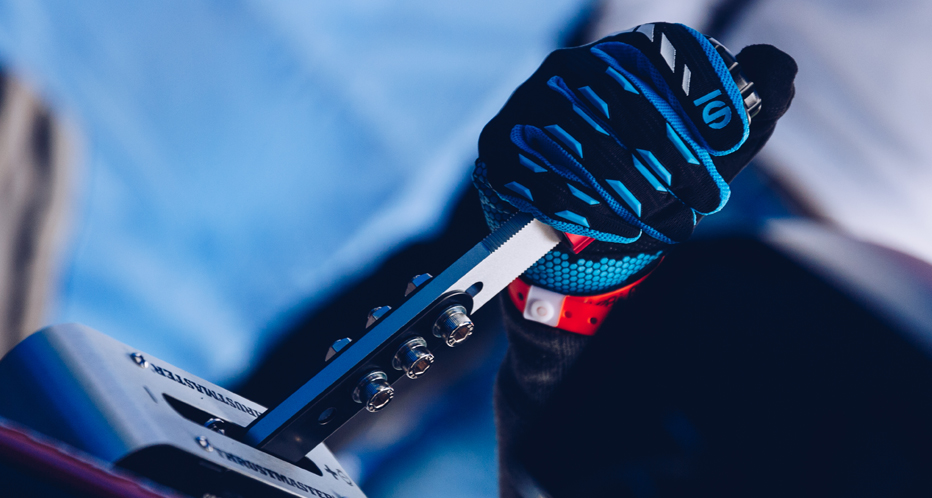
Not all sim racing gloves use the same materials, and this significantly affects their performance characteristics. Understanding the differences helps you choose the right pair for your specific needs.
Material |
Key Benefits |
Best For |
Considerations |
|---|---|---|---|
Synthetic leather |
Durable, affordable, easy to clean |
Budget-conscious racers |
Less breathable than natural materials |
Natural leather |
Premium feel, excellent grip, long-lasting |
Serious enthusiasts |
Higher price point, requires care |
Nomex |
Fire-resistant, professional-grade |
Real-world track day crossover |
Overkill for sim-only use |
Mesh panels |
Enhanced breathability, moisture wicking |
Hot climates, long sessions |
May sacrifice some durability |
Silicone grip patterns |
Maximum grip, touchscreen compatible |
Precise control needs |
Can feel bulky to some users |
The palm is the most important area to assess. This is where you make constant contact with the wheel, so weak palm material can make even expensive gloves feel disappointing.
Look for palms that feel secure without being sticky. Too much grip can feel unnatural, especially if you make lots of small steering corrections. Too little grip defeats the purpose of using gloves in the first place.
Australian sim racers should take breathability seriously.
A thick motorsport-style glove might look great, but it can become uncomfortable fast in a warm room. If your simulator sits in a spare bedroom, garage, study, or non-air-conditioned space, heat build-up can become one of the biggest comfort issues.
Lightweight sim racing gloves are usually easier to live with in warm Australian rooms than thick motorsport-first designs. Mesh panels across the back of the hand, lighter materials between the fingers, and moisture-wicking fabrics can make longer sessions much easier to manage.
For sim-only use, fire resistance is usually less important than comfort, ventilation, and grip. Nomex gloves can make sense if you also do real-world motorsport or track days, but they are often more glove than most home sim racers need.
Our recommendation for Australian drivers is simple: prioritise airflow first, especially if you race in summer or run long sessions.
You can buy premium sim racing gloves, but if they pinch, bunch up, or restrict your fingers, they will hurt your driving instead of helping it.
Most brands use a palm measurement for sizing. You usually measure around the widest part of your hand, excluding the thumb, then compare that measurement to the brand’s sizing chart. The challenge is that sizing can vary between brands, so a medium in one glove may not feel like a medium in another.
The glove should feel snug, but not restrictive. You should be able to make a fist, spread your fingers, reach buttons, pull paddles, and rotate your wrist without pressure across the knuckles.
We've found that the most common mistake is choosing gloves that feel fine for two minutes, but become uncomfortable after gripping the wheel for half an hour.
Before committing to a size, check these areas:
Make a fist several times and check for tightness across the knuckles
Spread your fingers and make sure the webbing does not pull
Flex your wrist and check that the cuff does not dig in
Check the fingertip length so the material does not bunch at the ends
Grip your wheel rim and test button reach if possible
If you are between sizes, think about how you prefer your wheel to feel. A tighter glove can feel more direct, but it can also become uncomfortable. A slightly roomier glove may feel more relaxed, but excess fabric can reduce feedback and create pressure points.
Walk into any sim racing community and you'll find passionate advocates on both sides of this debate. Each style has legitimate advantages, and the right choice depends on your priorities.
Full-finger gloves provide:
Complete hand protection
Consistent grip across all contact points
Better temperature regulation in cool environments
Professional appearance and feel
Fingerless gloves offer:
Superior tactile feedback for button inputs
Easier touchscreen interaction (crucial for apps like SimHub or Crew Chief)
Better cooling in hot conditions
Less restrictive feeling for some users
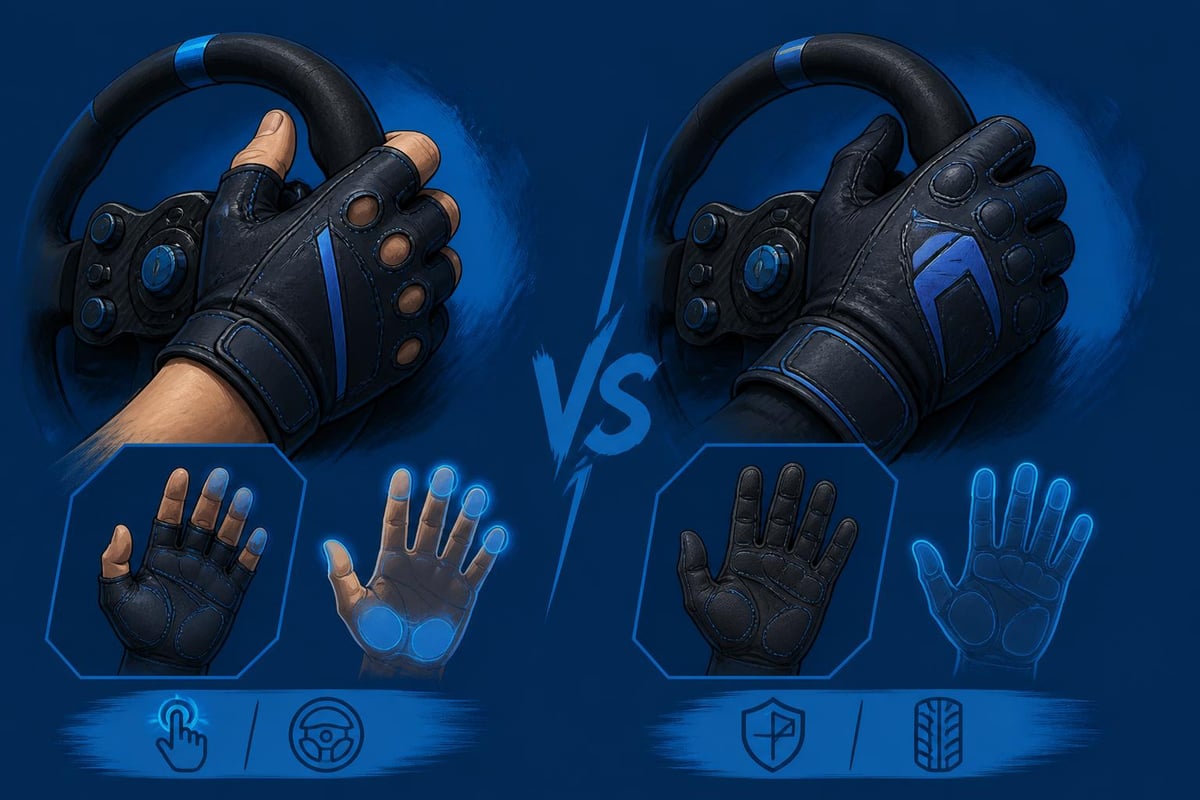
Our general recommendation is this: choose full-finger gloves for comfort, wheel protection, and long sessions.
Choose fingerless gloves if button control, touchscreen access, and cooling matter more to your setup.
Modern rigs often use more than just a wheel and pedals. Many drivers run dashboards, tablets, mobile apps, button boxes, stream decks, or telemetry screens alongside their simulator.
That makes touchscreen-compatible sim racing gloves more useful than they used to be.
Touchscreen fingertips use conductive material so you can interact with phones and tablets without removing your gloves. This is handy if you use SimHub, Crew Chief, a phone dashboard, or a tablet mounted near your wheel.
Button feel also matters. Some gloves make buttons and rotary encoders harder to use because the fingertips are too thick. Others feel more natural because the material is thinner and more flexible.
If your wheel has a lot of inputs, don't just focus on palm grip. Make sure the fingertips give you enough control to use your setup properly.
Pay attention to seam placement and stitching quality. Gloves experience significant stress at specific points, particularly between the thumb and index finger, and along the palm where you grip the wheel.
Look for:
Double or triple stitching in high-stress areas
Reinforced palm sections
Seamless fingertips (seams in fingertips cause irritation)
Elasticated wrists that stay secure without cutting off circulation
Hook-and-loop or elastic closures that remain functional after repeated use
Sim racing gloves span a wide price range, from budget options under fifty dollars to premium pairs exceeding two hundred. Understanding what you get at each tier helps you make an informed decision.
Entry-level ($30-$60): Basic construction with synthetic materials, standard grip patterns, and simple designs. These work fine for casual racers or those testing whether gloves suit their style. Don't expect advanced features or exceptional durability.
Mid-range ($60-$120): This sweet spot offers excellent value. You'll find quality materials, better breathability, touchscreen compatibility, and construction that withstands regular use. Most serious sim racers find everything they need in this range.
Premium ($120-$250+): Professional-grade materials, maximum durability, advanced grip technologies, and often the same gloves used by real-world racing drivers. The performance gains over mid-range options are incremental, making these worthwhile mainly for competitive racers or those who simply want the best.
Quality sim racing gloves represent an investment, and proper care extends their lifespan significantly. Fortunately, maintenance isn't complicated.
Most gloves are machine washable, but always check manufacturer instructions first. General best practices include:
Wash regularly - Don't let sweat and oils accumulate. Every 3-5 sessions for heavy users, less frequently for occasional racers.
Use cold water - Hot water can damage grip materials and cause shrinkage.
Air dry only - Heat from dryers degrades elastic and can melt synthetic grip elements.
Store properly - Keep them flat or loosely folded in a ventilated area, not balled up in a drawer.
Rotate pairs - If you race frequently, owning two pairs and alternating between them extends the life of both.
Leather gloves require different care. These typically shouldn't be machine-washed. Instead, wipe them down with a slightly damp cloth after use and occasionally treat them with leather conditioner to prevent drying and cracking.
Let's be honest about situations where sim racing gloves might not be necessary or beneficial. If you're racing casually for twenty-minute sessions a couple of times a week, the investment might not pay off. Basic household gloves or even going bare-handed works fine for many casual racers.
Similarly, if you're still building your initial setup and working with a basic wheel, prioritising upgrades to your wheel base, pedals, or seat probably delivers more noticeable performance improvements than gloves.
However, once you've established a solid foundation and you're regularly running longer sessions, gloves become increasingly valuable. Many racers report that gloves were the accessory they didn't know they needed until they tried them.
Through conversations with racers and examining reviews, several common pitfalls emerge when people first purchase sim racing gloves.
Buying solely on appearance: That carbon fibre pattern looks wicked, but does it actually enhance performance? Focus on functional features over aesthetics.
Ignoring return policies: Given sizing challenges, purchasing from retailers with flexible return policies saves headaches. Always verify this before buying.
Choosing fashion over function: Real racing gloves designed for actual motorsport offer great style but may include features (like fire resistance) you don't need while lacking features (like touchscreen compatibility) you do need.
Not considering your climate: Living in tropical Queensland? Those thick, insulated gloves will be unbearable. Match materials to your environment.
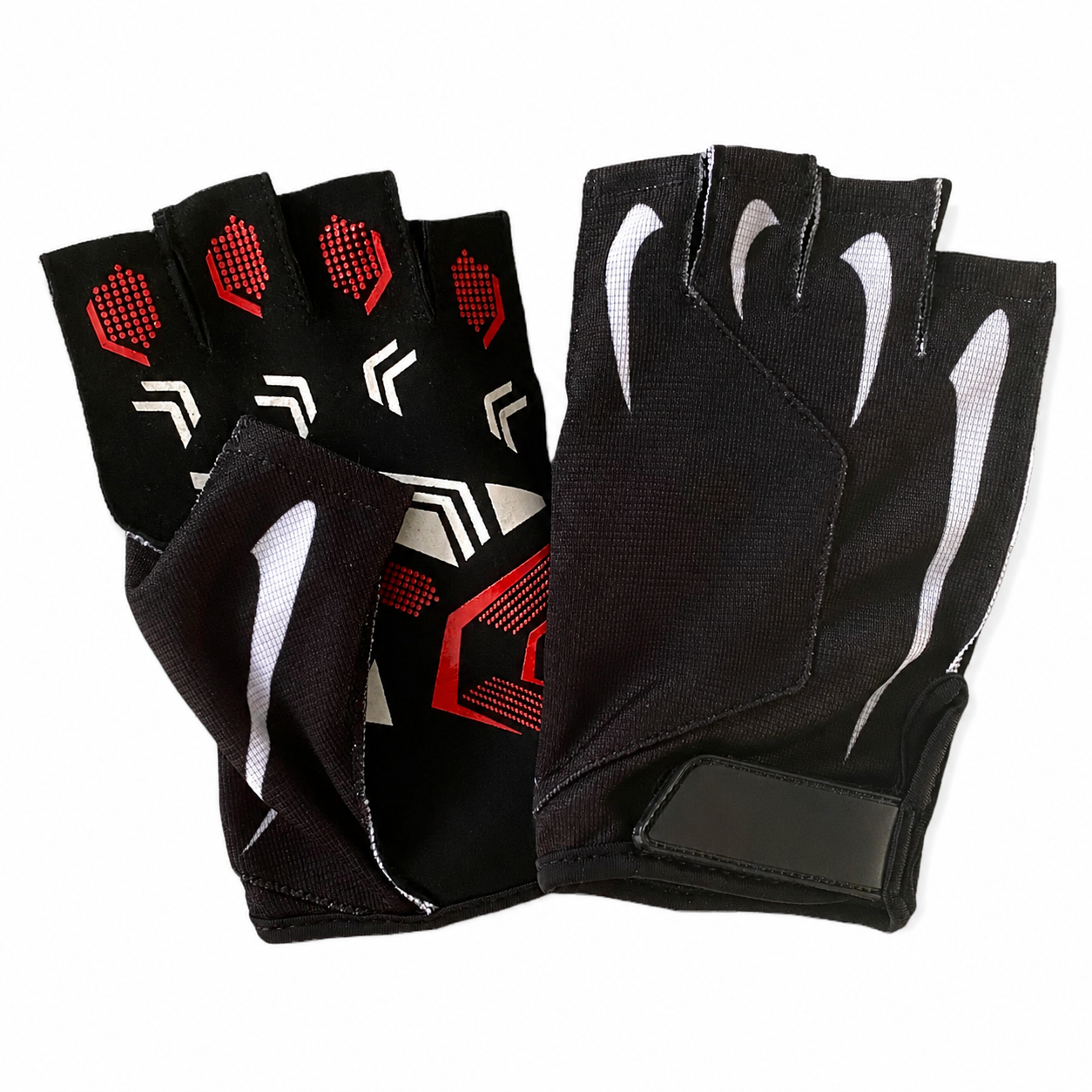
Once you've purchased your gloves, you might experience an adjustment period. The wheel feels different, your muscle memory needs recalibration, and initially you might even lap slower.
Give yourself three to five sessions to adapt. During this time:
Start with practice sessions, not competitive racing
Adjust your force feedback settings if needed, as gloves slightly dampen feedback
Recalibrate your grip pressure, you'll likely find you can hold the wheel much lighter
Pay attention to hand position, gloves might reveal bad habits you developed
Most racers report that after this brief adaptation, they wouldn't go back to racing without gloves. The consistency and comfort become part of their expected experience.
Gloves often serve as a gateway to thinking more comprehensively about racing simulator accessories. Once you experience how a relatively small addition improves your experience, you start considering other enhancements.
Quality shoes with thin soles for better pedal feel, racing-style seats that improve posture and comfort, tactile transducers for enhanced immersion-each component contributes to the overall experience. Gloves fit naturally into this progression, usually coming after the major hardware investments but before more specialised additions.
Before choosing sim racing gloves, run through this checklist:
Do they fit snugly without restricting finger movement?
Does the palm material suit your wheel rim?
Are they breathable enough for your room and climate?
Can you use your wheel buttons, paddles, and rotary controls easily?
Do you need touchscreen-compatible fingertips?
Are the seams comfortable around the palm and fingertips?
Is the wrist closure secure without feeling tight?
Will they help protect your rim material?
Are they easy to clean and maintain?
Do they match how often and how long you race?
If the answer is yes to most of these, you are probably looking at the right style of glove.
For regular drivers, yes, sim racing gloves are worth considering. Well-fitted sim racing gloves can make your setup feel more consistent without requiring a major hardware upgrade.
They improve grip consistency, reduce direct sweat and oil contact with the wheel, help protect premium rims, and make longer sessions more comfortable. The benefit becomes more noticeable if you race for longer than 30 minutes, use a direct drive wheel base, drive in a warm room, or own an Alcantara-style or suede-style wheel.
For casual drivers, gloves are less urgent. You can still enjoy sim racing without them. But once your sessions get longer and your setup becomes more serious, gloves become one of those small upgrades that make more sense with every race.
Our recommendation is to start with fit, breathability, and palm grip. Choose the glove that suits your wheel, your climate, and your driving style before worrying about styling or motorsport-grade features.
The right sim racing gloves will not transform a basic setup on their own, but they can make your existing rig feel more comfortable, controlled, and easier to use across longer sessions.
Here at Gamer Gear Direct, we offer expert guidance on building the perfect simulation setup for your needs, with a knowledgeable team ready to help you select every component from major hardware to the finishing touches.