🥳🥳EOFY Sim Sale On Now - Up To 30% Off🥳🥳
Skip to content
Direct Drive vs Belt Drive vs Gear Drive: Which Sim Racing Wheel Is Right for You?

Direct Drive vs Belt Drive vs Gear Drive: Which Sim Racing Wheel Is Right for You?

Written by: Karl Matias

|

If you're shopping for your first sim racing wheel — or looking to upgrade — you'll quickly run into three types of wheelbase technology: gear-driven, belt-driven, and direct drive. The type of wheelbase you choose affects everything about your sim racing experience: how the wheel feels, what information it gives you from the car, how long it lasts, and how much you spend. This guide breaks down all three, cuts through the marketing noise, and gives you the honest GGD take on which one is right for where you're at in your sim racing journey.

What Are the Three Types of Sim Racing Wheelbases?

A direct answer first: sim racing wheelbases are categorised by how the motor connects to the steering shaft. Gear-driven wheels use plastic or metal cogs. Belt-driven wheels use pulleys and rubber belts. Direct drive wheels connect the motor shaft straight to the wheel with nothing in between. That difference in mechanical design determines everything else — feel, detail, responsiveness, noise, and longevity.

Understanding which type suits your situation is the most important decision you'll make when buying a sim racing wheel.

How Does a Gear-Driven Wheel Work?

A gear-driven wheelbase uses a small motor with a series of plastic or metal gears to amplify and transfer torque to the steering shaft. The motor spins, the gears multiply the force, and that force is transmitted to your hands through the wheel.

What it feels like: Gear-driven wheels produce a characteristic notchy, stepping sensation — you can feel the gear teeth engaging as you turn. Force feedback tends to be coarse rather than smooth, and fine details from the road surface or tyre behaviour get filtered out by the gear mechanism before they reach your hands.

The trade-offs:

  • Cheapest entry point into force feedback sim racing
  • Plastic gear models wear quickly, especially under heavy use
  • Audible — gear whine and mechanical noise during operation
  • Force feedback quality degrades as gears wear over time
  • Limited torque ceiling

Gear-driven wheels still have a place — primarily for absolute beginners on the tightest possible budget who want to try sim racing before committing further.

How Does a Belt-Driven Wheel Work?

A belt-driven wheelbase uses a pulley and rubber belt system to transfer the motor's torque to the steering shaft. Instead of metal gears grinding against each other, a belt wraps around two pulleys and transmits force more smoothly.

What it feels like: Considerably smoother than gear-driven, with less mechanical noise and a more fluid rotation. Force feedback is more nuanced, though the belt itself absorbs and softens some of the signal before it reaches your hands. You feel the broad strokes of what the physics engine is trying to tell you, but the fine detail is still being filtered.

The trade-offs:

  • Smoother and quieter than gear-driven
  • Force feedback is better but still softened by the belt
  • Belts stretch over time, causing inconsistent feedback
  • Belts eventually need replacement
  • With entry-level direct drive now more accessible, the price gap has narrowed significantly

What is Direct Drive and How Does It Work?

A direct drive wheelbase eliminates the gears and belts entirely. The motor shaft connects directly to the steering wheel — no intermediary components, no translation, no loss of signal. The result is force feedback that's cleaner, faster, and more detailed than anything gear or belt-driven can deliver. You feel road texture, tyre slip, weight transfer and kerb strikes the way they actually happen.

For a deeper dive into the technology, our guide to what is a direct drive wheel covers the mechanics in detail.

The Bicycle Analogy: Understanding the Difference

When customers come into our Dandenong South showroom and ask us to explain the difference between these three wheelbase types, this is the analogy we use — and it lands every time.

A gear-driven wheel is like riding a bike with a loose, worn chain. You're pedalling, the wheels are moving, but there's slack in the system. Every input has a little delay before something happens. Little details get lost in the noise of the mechanism.

A belt-driven wheel is like riding a bike with a fresh, tight chain. Much better — the power transfers more efficiently, the ride is smoother, and the feedback is cleaner. But the chain is still there, and it's still doing some filtering.

A direct drive wheel is like a fixed-gear bike. Your legs connect directly to the rear wheel with no slack, no delay, no translation. Every micro-movement you make transfers immediately and completely. And every piece of information from the road comes back to you just as directly.

That's the difference you feel when a customer who's been running a belt or gear-driven wheel for years sits behind a direct drive wheelbase in our showroom for the first time. The reaction is almost always the same — quiet for a moment, then "oh, that's what it's supposed to feel like."

Sim racer hands gripping direct drive steering wheel — cockpit perspective blue teal lighting

Direct Drive vs Belt Drive vs Gear Drive: Head to Head

Gear-Driven Belt-Driven Direct Drive
Force feedback quality Basic, notchy Smooth but softened Detailed, immediate
Road texture feel Minimal Moderate Full
Response time Slow Moderate Instant
Noise level Loud Moderate Near silent
Torque output Low Moderate High
Durability Gears wear quickly Belts stretch/snap Motor lasts decades
Maintenance Regular gear check Belt replacement needed Maintenance free
Price range (AUD) $100–$300 $300–$700 $600–$3,000+
Best for Absolute beginners Intermediate sim racers Serious sim racers
Console compatible Some models Some models Select models

Which Wheelbase Type Is Right for You?

Choose gear-driven if:

You're a complete beginner who wants to try sim racing with minimal financial commitment and aren't sure if it's for you yet. Just know that you'll likely feel the pull to upgrade sooner rather than later.

Choose belt-driven if:

You're past the absolute beginner stage and want a meaningfully better experience than gear-driven without stepping up to direct drive yet. That said, with entry-level direct drive now more accessible than ever in Australia, it's worth considering whether the price difference justifies the technology gap.

Choose direct drive if:

You're serious about sim racing — whether that means improving your lap times, increasing immersion, or simply getting the most from titles like Gran Turismo 7, Assetto Corsa Competizione, iRacing or F1. In our experience, the customers who go straight to direct drive never look back. The ones who start with belt or gear-driven wheels often end up upgrading within 12 months anyway — which means they spend more overall than if they'd started with direct drive from the beginning.

Direct Drive Options at Gamer Gear Direct

We stock direct drive wheelbases from entry-level to full flagship. Here's how the range stacks up:

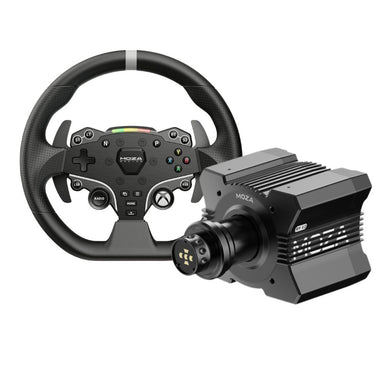
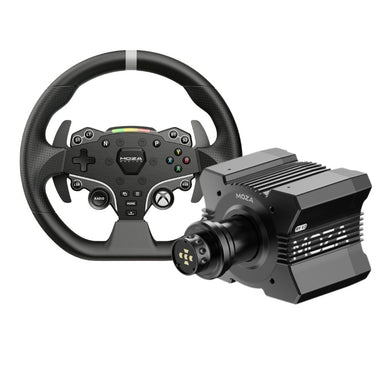
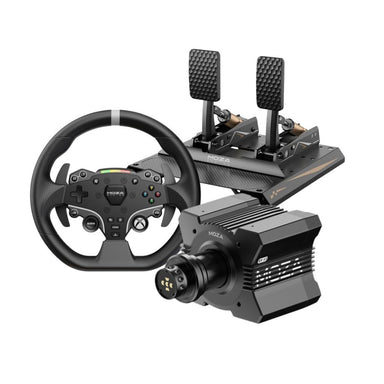
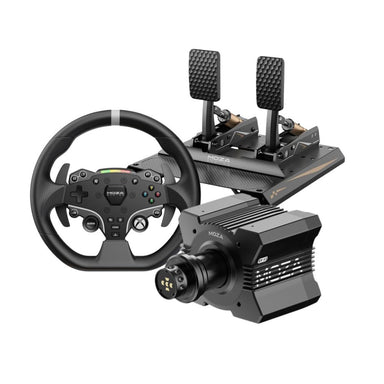
Best entry-level direct drive for PC — MOZA R5 Bundle

5.5Nm of direct drive torque, ES steering wheel, SR-P Lite pedals, easy Pit House setup. Everything you need to get started with genuine direct drive on PC, in one box. Check current pricing at our MOZA Racing collection.

MOZA R5 Bundle — entry level direct drive wheelbase Australia PC sim racing

Best direct drive for PS5 and Xbox — Logitech RS50

8Nm of direct drive torque, TRUEFORCE haptics, PS5/PS4/Xbox/PC compatible from one base. The pick for console sim racers making the jump to direct drive. Check current pricing on our Logitech RS50 product page.

Logitech RS50 direct drive wheel — PS5 Xbox PC Australia

Best mid-range direct drive — MOZA R9 V3 Bundle

9Nm of direct drive torque, the sweet spot between entry-level and high-end for PC sim racers who want more feedback and detail without going full flagship. Browse the full MOZA Racing range at Gamer Gear Direct.

Best direct drive for PS5 — Logitech G PRO Wheel

11Nm, maximum force feedback for console and PC, designed with input from professional sim racers. The no-compromise choice for serious PS5 sim racers. Check current pricing on our Logitech G PRO Wheel product page.

Flagship direct drive — MOZA R25 Ultra True Torque

The MOZA R25 Ultra True Torque is MOZA Racing's flagship direct drive wheelbase and the most powerful option we stock. For PC sim racers who want the absolute pinnacle of direct drive performance — maximum torque, maximum fidelity, zero compromise — the R25 is where the range ends. Check current pricing on our MOZA R25 Ultra True Torque product page.

MOZA R25 Ultra True Torque direct drive wheelbase — flagship sim racing Australia

Frequently Asked Questions

What is the difference between direct drive and belt drive?

A belt-driven wheelbase uses a pulley and rubber belt system to transfer motor torque to the steering shaft — smooth but with some signal loss through the belt. A direct drive wheelbase connects the motor shaft directly to the wheel with no intermediary components, delivering faster, more detailed, and more powerful force feedback. Direct drive is the superior technology for serious sim racers.

Is direct drive worth it for beginners?

It depends on your budget and commitment level. If you're serious about sim racing and plan to stick with it, starting with direct drive is often more cost-effective than buying a belt or gear-driven wheel and upgrading later. Entry-level options like the MOZA R5 Bundle and Logitech RS50 are now accessible enough that the jump isn't as daunting as it once was.

What does direct drive feel like compared to a Logitech G29 or G923?

The difference is significant. The G29 and G923 are gear-driven wheels — the force feedback is functional but coarse, and fine road texture details are largely lost in the gear mechanism. A direct drive wheel delivers that information clearly and immediately. Most sim racers who upgrade describe it as feeling like they've been driving with the volume turned down and someone finally turned it up.

Does direct drive work on PS5?

Not all direct drive wheelbases support PS5. The Logitech RS50 and G PRO Wheel are both natively PS5, PS4, Xbox Series X/S and PC compatible. Most MOZA wheelbases are PC only. Always check platform compatibility before purchasing.

How much does a direct drive wheel cost in Australia?

Entry-level direct drive wheelbases in Australia start from around $600–$700 for the MOZA R5 Bundle (PC only) and the Logitech RS50 base. Mid-range options sit between $900–$1,400. Flagship direct drive systems like the MOZA R25 Ultra True Torque represent the pinnacle of the range. Check current pricing at gamergeardirect.com.au.

Is a belt-driven wheel still worth buying in 2026?

For most sim racers, no — the price gap between belt-driven and entry-level direct drive has narrowed significantly. Unless you're on an extremely tight budget, direct drive now represents better long-term value for the realistic improvement it delivers.

Where can I try a direct drive wheel before buying in Australia?

Gamer Gear Direct's Dandenong South showroom has direct drive wheelbases running on demo rigs — MOZA and Logitech options available to try before you buy. No other commitment required, just come in and feel the difference.

Sim racing cockpit rig indoor home simulator setup — direct drive wheel aluminium frame blue teal lighting

Ready to find your perfect wheelbase? Browse our full direct drive wheelbase collection at Gamer Gear Direct, or visit us at our Dandenong South showroom to try before you buy.

Written by Karl Matias, Customer Service Specialist at Gamer Gear Direct. With six years of experience across racing and flight simulation, Karl has a well-rounded passion for all things sim and a knack for helping GGD customers find their perfect setup. Whether you're just starting out or looking to upgrade, Karl's been there — and probably already has an opinion on your next piece of gear.